CapMetro Adds 2.9 MW Charging Capacity to Support 22-Hour Bus Shifts
Two new park-and-ride terminals in Austin now feature overhead pantograph chargers that allow electric buses to top up batteries between runs.
By Leila Santos ·
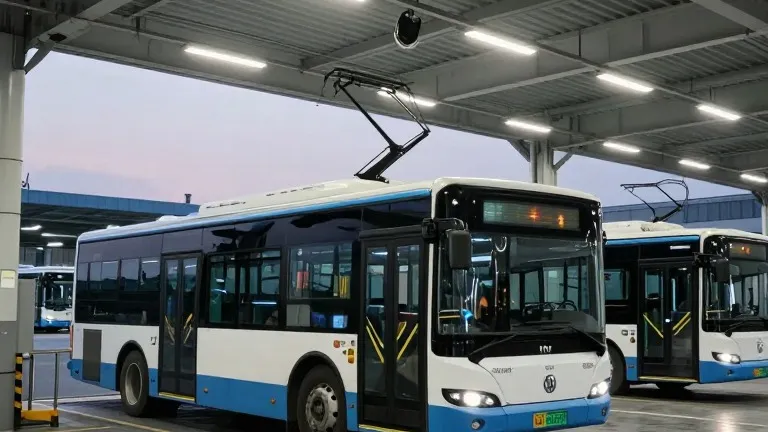
CapMetro in Austin has electrified its Rapid 800 and Rapid 837 bus lines and opened two new park-and-ride facilities equipped with overhead charging infrastructure. The move expands the city's electric transit network and introduces a new method for extending vehicle service hours.
The Goodnight Ranch and Expo Center terminals were initially announced in June and are now fully operational. They serve as endpoints for the Rapid 800 and 837 routes, providing both passenger amenities and the charging equipment necessary to keep electric buses on the road for extended periods.
The charging system relies on a network that begins at CapMetro's main bus depot. Infrastructure partner Camber Charging installed two 1,440 kW systems at the facility. These systems connect to 48 industrial dispensers, creating a total charging capacity of 2.9 MW. The setup allows the agency to charge up to 48 electric buses simultaneously during overnight cycles.
New Flyer of Canada supplies the vehicles for these routes, which are built on the Xcelsior battery-electric platform. The buses produce up to 320 all-electric horsepower and provide full torque at 0 rpm, a specification intended to handle Austin's stop-and-go traffic patterns. New Flyer states the platform offers up to 660 kWh of available battery capacity, although CapMetro did not specify the exact battery size for the units in operation.
CapMetro Chief Operations Officer and Executive VP Andy Skabowski said the on-route charging strategy significantly increases the time buses can remain in service. "Instead of a typical bus holding 8 hours of charging, on-route charging takes that out to 20 to 22 hours," Skabowski explained. "Every time that pantograph drops, we charge that bus. That's what makes a commitment like (every) 10- to 15-minute service possible."
The Goodnight Ranch and Expo Center terminals use overhead pantograph chargers to allow buses to top up their batteries at the end of each run. This process eliminates range concerns for the return trip and supports higher frequency service levels. Camber Charging also provides preventive maintenance, energy management software, and remote diagnostics across all three charging locations in the network.
The agency now operates a system where depot charging handles bulk power needs overnight, while on-route chargers manage top-ups during the day. This hybrid approach enables the Rapid 800 and 837 lines to maintain schedules that require buses to be in service for up to 22 hours.
Source: Electrek
More Business · Tech news · Bad Business · Report a business · Got a Story?