Carrion crows complete visual motion tasks in 0.5 seconds
A new study from the University of Tübingen shows that birds process visual evidence at double the speed of primates, despite lacking a neocortex.
By Leila Santos ·
Andreas Nieder and Philipp Schmidbauer at the University of Tübingen tested two hand-raised carrion crows on a visual task typically used to study primate brain function. The crows completed the trials in half the time required by monkeys, according to the new study published today.
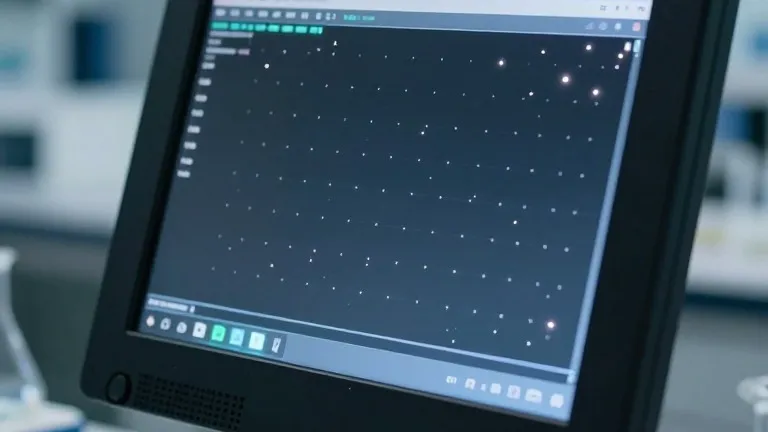
The experiment utilized the random-dot-motion task, a standard method for measuring how brains gather visual evidence. In this test, a cloud of flickering white dots drifts weakly across a black background. The subject must determine the direction of movement. Primates solve this by accumulating evidence until neural firing rates cross a threshold, triggering a decision. Birds lack a neocortex, the brain region responsible for this process in primates, leaving a gap in scientific understanding of avian decision-making.
"This was the big question," Nieder said. "How [would] a differently organized avian brain encode decisions?"
The researchers placed the crows in front of a touch-sensitive monitor. The birds pecked at targets flanking the display to indicate the direction of the drifting dots. A correct answer resulted in a mealworm reward. The team kept the experimental conditions identical to those used with monkeys, with the only difference being the method of response. Crows pecked, while monkeys used eye movements.
Difficulty levels were adjusted by changing the percentage of dots moving in a coherent direction. The easiest condition involved 81 percent of dots moving together, while the hardest involved only 3 percent. The team also included a condition with 0 percent coherence, where no correct answer existed.
The data showed that the crows used the same mathematical logic as primates to reach their choices. However, the birds processed the visual data at twice the speed. This finding demonstrates that a brain without a neocortex can arrive at decisions through a comparable process, challenging assumptions about the neural requirements for rapid visual judgment.
Source: Ars Technica