Rutgers study links prenatal wildfire smoke to higher autism risk
New research using Medicaid data from 2007 to 2014 found a 30% increase in autism diagnosis odds for every 0.75 microgram per cubic meter rise in wildfire particulate exposure.
By Priya Singh ·
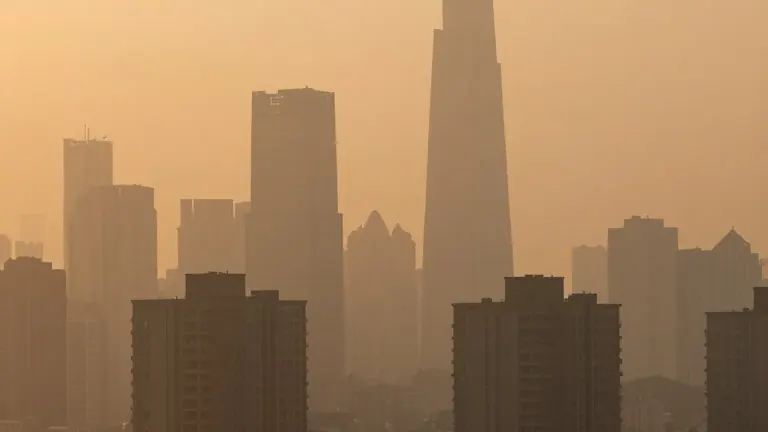
A new study published Tuesday in JAMA Pediatrics reports a statistical association between wildfire smoke exposure during pregnancy and an increased risk of autism diagnosis in children. The research challenges the assumption that wildfire pollution is a problem limited to rural fire zones, as cities like Philadelphia and New York have recently experienced hazardous air quality from distant fires.
Dr. Stefania Papatheodorou, an epidemiologist at the Rutgers School of Public Health and the study's lead author, explained that smoke can travel long distances and affect air quality even when it is not visible to the naked eye. She noted that the findings underscore the need for pregnant individuals to monitor air quality during wildfire events.
The team analyzed Medicaid records for nearly 900,000 mother-child pairs collected between 2007 and 2014. They focused on PM2.5, which refers to fine particulate matter with diameters of 2.5 micrometers or smaller. For context, a human hair measures between 80 and 100 micrometers in width.
The data showed that for every 0.75-microgram-per-cubic-meter increase in the average concentration of wildfire fine particles, the likelihood of a child receiving an autism diagnosis rose by 30 percent. The study identified the period after the 15th week of pregnancy as the time of strongest association between exposure and later diagnosis.
Papatheodorou stated that pregnancy is a critical window for brain development, making it vulnerable to environmental interference. She suggested that the middle and later stages of pregnancy may be particularly sensitive to the effects of wildfire smoke on the developing brain.
The researchers emphasized that the study is observational and does not prove that wildfire smoke causes autism. It identifies a correlation between higher concentrations of particulate matter and subsequent diagnoses. The data also showed no link between prenatal wildfire smoke exposure and attention deficit disorder.
The analysis included only mother-child pairs who remained continuously enrolled in Medicaid throughout the study period. As wildfire activity has more than doubled in recent years, these findings provide new data for public health officials and expectant parents in regions far from active fires.
Source: PhillyVoice