Chicago museum marks 40 years of Día de Muertos with new exhibition
The National Museum of Mexican Art displays 40 years of ofrendas as the holiday enters mainstream retail shelves.
By Leila Santos ·
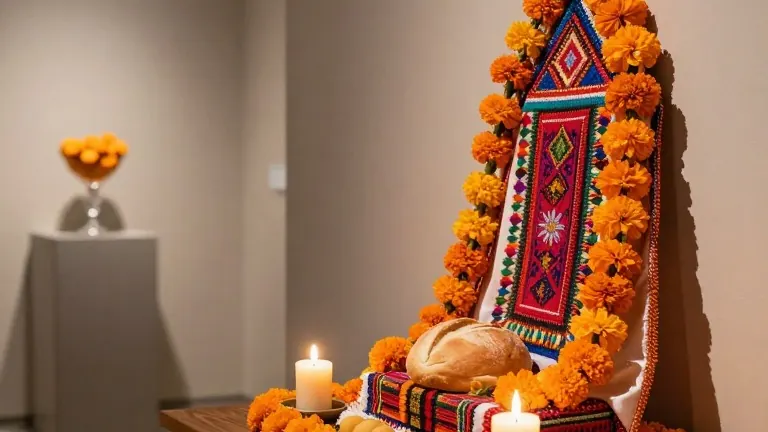
The National Museum of Mexican Art in Pilsen opened its 40th annual exhibition of ofrendas on October 30. The show, titled Where Memory Lives: 40 Years of Día de Muertos, runs through November 29. It features altars created by local artists and community members.
Cesáreo Moreno, the museum’s chief curator, noted that the holiday has shifted from a niche observance to a major commercial presence. Retailers including Target, Walmart, Kohl’s, and Amazon now sell dedicated holiday sections. Lego also released a set featuring an ofrenda and a sugar skull. Moreno stated that while the increased visibility is positive, the museum now navigates a post-Coco holiday landscape.
He expressed concern that the spiritual nature of the remembrance could be diluted by commercialization. “My biggest concern is that it becomes melded into Halloween and that the spiritual aspect is watered down to sell stuff,” Moreno said. He emphasized that Día de Muertos is a spiritual remembrance distinct from Halloween traditions.
The exhibition includes works that trace the history of the practice in the United States. The tradition, rooted in indigenous Mesoamerican cultures and blended with Catholicism, became more common in the 1970s and 1980s alongside Mexican immigration. Carina Yepez, a Pilsen resident and textile artist, learned about ofrendas at 19 while working as a tour guide for the museum. She now creates altars in her home year-round to honor family members.
This year’s show includes an ofrenda dedicated to Gilberto Cárdenas, a former Notre Dame professor who died in late July. Brookes Ebetsch, executive director of the Chicago Artists Coalition, created the altar for the museum. It features a Smith Corona typewriter, Peet’s coffee cups, and Biscoff cookies. Ebetsch included a list of Cárdenas’s accomplishments to show who was influenced by him rather than to boast about his achievements.
The display also features a minimalist ofrenda by artist CHema Skandal! for his father, who died in January. It includes 76 coffee beans representing his father’s years of life and a traditional sleeping mat from his village. David Rios contributed a triptych made entirely of glass, honoring those who cross borders on foot. The exhibit closes with a traditional altar created by Oaxacan artist Demetrio García Aguilar in memory of his mother, Josefina Aguilar, who died in February at age 80.
Source: The Aegis