New Car Prices Top $50,000
Tariffs, chip shortages, and record fuel costs are pushing up production expenses for major automakers even as revenue rises.
By Priya Singh ·
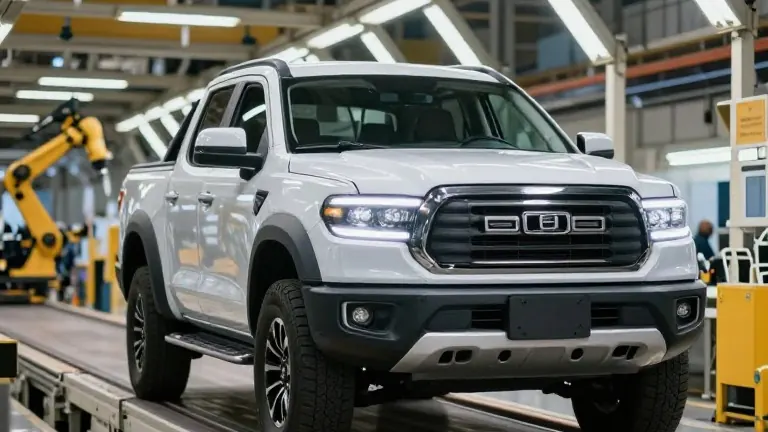
The average price of a new car in the United States passed $50,000 in September. Kelley Blue Book reported that this figure approached a record high. This increase reflects rising costs for materials, transportation, and labor across the industry.
General Motors, Ford, and Stellantis all reported higher revenue for the third quarter compared to the same period last year. General Motors saw revenue rise by 2.9%. Ford reported a 2% gain, and Stellantis posted a 1% increase. These gains came despite warnings that producing vehicles has become more expensive.
Buyers are driving larger vehicles, which helps support these revenue numbers. General Motors said light-duty truck sales increased by 9% over the past year. Stellantis reported a 34% jump in U.S. pickup sales. Ford’s F-Series remained a top seller for the company. Consumers continue to spend on bigger vehicles and more expensive trim levels, which generate higher profits for manufacturers.
Several factors are driving up manufacturing costs. The Trump administration has imposed additional tariffs on imported steel, aluminum, and copper since 2025. Copper prices are also under pressure from demand for electric vehicle batteries and data centers. Memory chips used in vehicle electronics have become more expensive due to constrained supply and competition from the artificial intelligence industry. Antonio Filosa, the chief executive officer of Stellantis, said that higher chip and raw material prices would affect the entire industry.
Transportation costs are adding to the burden. AAA reports that the average diesel price is around $6.35 per gallon, near the record high set in September. This increases the expense of moving finished vehicles to dealerships. It also raises costs for transporting parts through supply chains in the United States and Canada, where components may cross the border repeatedly. Sherry Ann House, the chief financial officer of Ford, stated that fuel prices are raising freight and energy costs without weakening demand for trucks and fleet vehicles.
General Motors forecasts that costs for materials, including computer chips and diesel, could reach $2 billion this year. Paul Jacobson, the company’s chief financial officer, estimated that tariff costs would amount to about $2.5 billion. This figure is lower than earlier expectations partly because of tariff refunds. Ford expects that commodities, memory, and logistics will create roughly $2 billion in additional costs compared with last year. Executives at Ford said that growth in software services and parts is helping to compensate for these increases. Stellantis plans to provide further details on its costs in the fourth quarter.
The industry is also adjusting to the loss of the $7,500 federal electric vehicle tax credit. Congress eliminated this credit through the One Big Beautiful Bill Act. The credit expired on September 30, 2025. National electric vehicle sales declined afterward, according to Edmunds and Cox Automotive. General Motors’ overall third-quarter sales fell by 6% from a year earlier, partly reflecting this smaller electric vehicle market. Jacobson said the company would align production with demand while maintaining its electric vehicle business.
Electric vehicle sales have stabilized after the decline last autumn. They accounted for about 6% of U.S. new vehicle sales in September, according to Edmunds. Hybrid sales increased by 27% over the past year. Ford executives highlighted plans to open preorders for the Fathom electric truck in early 2027. This truck is priced below $30,000. Sam Fiorani, an executive at Auto Forecast Solutions, expects Detroit manufacturers to expand their hybrid offerings as the transition to fully electric vehicles takes longer than anticipated.
Tesla has regained market share as other manufacturers retreat from some electric vehicle investments. Nearly 52% of new U.S. electric vehicle sales this year were Teslas, according to Edmunds. This occurred even as the company’s quarterly global sales declined from a year earlier. Third-quarter revenue for Tesla was roughly unchanged. Elon Musk, the company’s chief executive, emphasized spending on robotaxis and humanoid robots. Capital expenditures were nearly twice their level from a year ago. On a SpaceX earnings call, Musk said that special committees at SpaceX and Tesla were discussing a possible merger. He expressed support for the idea but noted that shareholders would need to back it. Analysts said the companies have some technological overlap, although combining their businesses could prove difficult to sell to some Tesla investors.
Source: NPR
More Business · National news · Bad Business · Report a business · Got a Story?