Spanish Rail Maintenance Gap: 135 Fatalities in Three Years
Survivors of three major crashes point to a decline in repair spending despite a doubling of ridership since 2019.
By Kenji Hassan ·
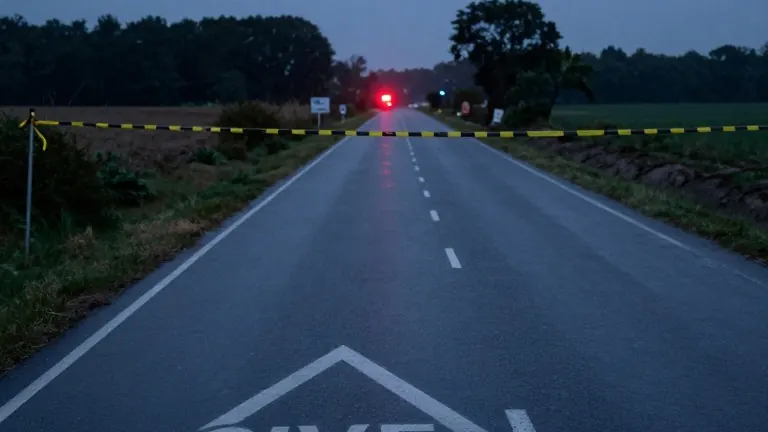
The death toll from Spain’s three worst high-speed rail disasters reached 175 people this week after at least 69 died in a collision near Toledo. This total includes the 80 killed in 2013 near Santiago de Compostela and the 46 killed in January near Cordoba. For passengers on the Madrid to Seville line, the frequency of these events has forced a reassessment of how the network is maintained and controlled.
Cristobal Gonzalez, a survivor of the 2013 Angrois crash, said the physical and mental injuries from that day still affect him. His train was traveling at 200 kilometers per hour when it left the tracks, a speed that exceeded the 80 kilometer per hour limit for that section. He described the event as defying imagination and said the mental scars remain visible years later.
Gonzalez joined other survivors in warning that further accidents are likely if systemic issues are not addressed. He noted that the Angrois crash involved speed, the Adamuz crash involved a track defect, and the recent Urda crash may have involved human error and control system failures. He argued that the common thread is a need for increased investment in safety rather than just new construction.
Santiago Rosendo, who was aboard the Renfe train during the January collision in Adamuz, recalled the sudden stop and the loud crash that followed. He described how the train slid onto its side, leaving passengers in the dark until he could see a body. Rosendo expressed disbelief that a second fatal crash occurred on the same line so soon after the first.
An initial investigation into the Adamuz incident found that a broken rail caused one train to veer into the path of an oncoming service. Experts say this type of failure is linked to insufficient maintenance spending. Data from the European Commission shows that Spain spent an average of $1.67 billion annually on high-speed lines between 2018 and 2022.
However, only 16 percent of that annual budget was allocated to maintenance or repairs. The remaining funds were used for new infrastructure. In comparison, Italy, Germany, and France, which operate smaller networks, spent between 33 and 39 percent of their respective rail budgets on maintenance during the same period.
Jose Maria Goicolea, spokesman for the Spanish Association of Civil Engineers, stated that the network has grown too large for its current maintenance level. He noted that the Madrid to Seville line uses a German-made LZB control system from the 1970s that is currently being phased out. Goicolea suggested closing that specific line while the system is replaced, citing its partial role in the recent crash.
Ridership on the high-speed network nearly doubled from 2019 to 2024, reaching 40 million passengers. Ramiro Aupin Lopera, an infrastructure expert at the University Politecnica de Catalunya, described the drop in maintenance investment since the 2011 financial crisis as ridiculous. He argued that the combination of higher usage and lower repair spending makes recent crashes predictable.
Private operators Ouigo and Iryo have also raised concerns about the obsolete LZB system on the Madrid to Seville route. Helen Venezuela, former director of Ouigo Espana, compared the system to watching a modern show in black and white. Diego Martin of the SEMAF drivers' union warned against blaming workers, stating that identifying technical causes is the primary method for preventing future accidents.
Source: Al Jazeera