Ten Needles: Pike Execution Struggle
A new court filing details the chaotic medical procedure that left Christa Pike hospitalized after surviving two doses of lethal injection.
By Kenji Hassan ·
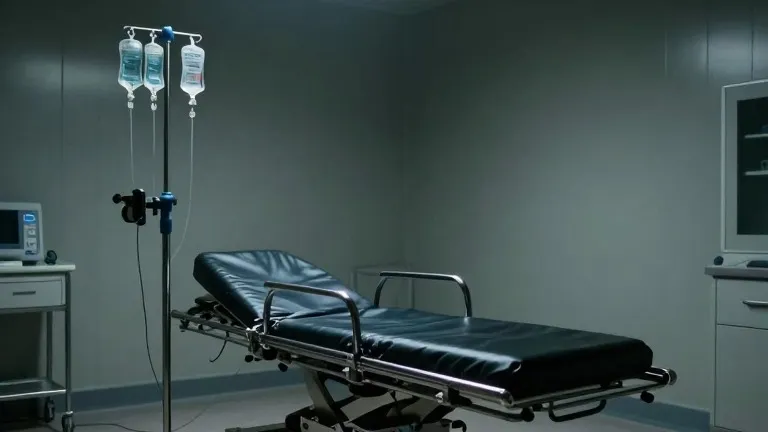
Members of a Tennessee execution team inserted approximately ten needles into the arms of Christa Pike before successfully administering lethal drugs, according to a court filing. The attorney for the death row inmate, Randy Spivey, stated that the medical staff warned one of Pike’s veins may have ruptured, or "blown," before the pentobarbital was pushed into her system. This document, submitted Thursday, provides the most granular account yet of the September 30 procedure that left the 50-year-old woman hospitalized.
Pike was convicted in 1995 for the stabbing death of her classmate, Colleen Slemmer. At age 18, she and her boyfriend killed Slemmer, making Pike one of the youngest women sentenced to death in the state. The state protocol mandates a second dose of pentobarbital if the first does not result in death, though it lacks specific guidelines for a survivor of the second injection.
The timeline of the failed execution reveals a prolonged struggle to establish the two intravenous lines required by protocol. Spivey wrote that the team began the process at 6:34 p.m. An IV was placed in Pike’s right arm within six minutes. However, the left arm took nearly an hour to prepare. Pike assisted by suggesting the team look in her upper arm for a usable vein. Spivey noted that Pike was "wincing and grimacing" as staff moved needles across her left arm.
Doubts among the medical team emerged early in the process. At 6:57 p.m., one team member stated a vein "might be blowing," though two others could not confirm. A later needle appeared severely bent upon removal. By 7:07 p.m., another team member declared, "I think it's blown." The group decided at 7:13 p.m. that an IV was successfully placed in the left arm, despite the apparent damage.
Phone communications began about five minutes after the final IV was set. Spivey reported that team members in an adjoining room repeatedly asked the IV team to check Pike’s left arm. It is unclear exactly when the pentobarbital entered the lines, but at 7:34 p.m., Pike said, "I feel like my arm is about to bust. It burns." Approximately ten minutes later, after speaking with her spiritual adviser, she began making an "agitated snoring sound."
For the next 30 minutes, Pike strained, flinched, and moved her head, appearing to struggle to breathe, Spivey wrote. He requested a phone to call his colleagues but was routed on a seven-minute walk through the facility rather than allowed to use the phone in the witness room. At 8:22 p.m., he called his fellow attorneys to stop the execution, noting that a third dose is not authorized. He then told the deputy attorney general that Pike needed immediate medical care.
At 8:50 p.m., Spivey was informed that an ambulance was on the way. Twenty minutes later, he was told medical staff were performing life-saving measures. An ambulance arrived at the hospital at 9:14 p.m. Pike was placed on a ventilator for several days, and her attorneys briefly feared she would not survive. She has since regained consciousness and returned to prison.
The filing was submitted in a separate legal challenge regarding Tennessee’s lethal injection procedures. Kit Thomas, an attorney representing other death row inmates, said the Pike case validates their concerns. "Our predictions about the likelihood of botched executions have come true, and will continue to come true, without substantial change," Thomas said. The state has not yet responded to the specific details in the new filing.
Source: CBC News