Doctors Criticize Handling of Tennessee Execution That Left Inmate Alive
Two medical experts say the team's conduct in Christa Pike's case would be malpractice in a hospital setting.
By Kenji Hassan ·
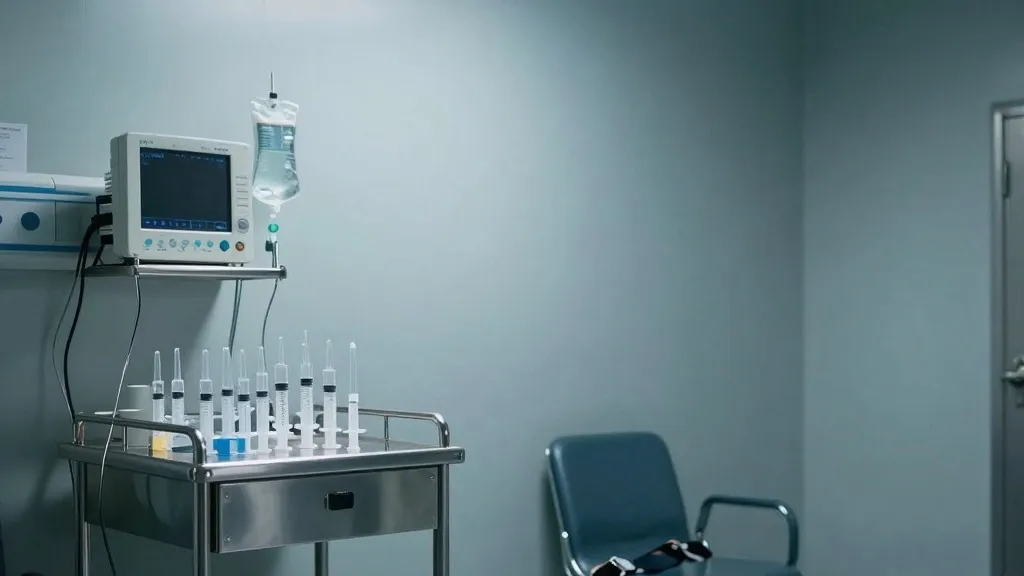
A Tennessee death row inmate survived a lethal injection attempt last month after prison staff spent nearly an hour trying to establish an IV line, according to a timeline filed by her lawyer in legal proceedings. Christa Pike received a dose of pentobarbital, a drug normally lethal at prescribed levels, but remained alive and spent 10 days in a hospital before returning to her prison cell. She can talk and walk, though her long-term health outlook is not known.
Randy Spivey, Pike's lawyer, filed an account on Thursday, October 22, describing what he witnessed in the death chamber on September 30. His chronology states that four unidentified members of the IV team used about 10 needles and repeatedly poked Pike's arms without securing a line, at times worrying that her veins had "blown." At 7:05pm, roughly half an hour into the procedure, a team member asked for a 24-gauge needle. Two minutes later, a team member said, "I think it is blown."
Medical experts reviewed the account. Jonathan Groner, an emeritus professor of clinical surgery at Ohio State University who studies execution methods, said the record showed no one in charge and no plan. "I'm shocked and disturbed by what happened inside the death chamber," Groner said. "The level of incompetence is astounding, and difficult to understand." Joel Zivot, a professor of anesthesiology and surgery in Atlanta who testified before the execution, said the catheter used was sized for an infant and could not push a 50cc syringe without damaging a vein. He listed a poorly written protocol, no one directing the procedure, and catheters too small for the task as failures he observed.
Pike's lawyers had warned the state repeatedly before the attempt that her veins were unusually small and compromised, relying partly on Zivot's expert opinion. The state's protocol called for 50cc of pentobarbital into each arm, for a total of 5g. At 7:23pm saline moved through the line only with difficulty, and a minute later the team concluded the IV was set and began the procedure. Groner said no clinician would push a caustic drug through an IV that did not flush easily.
Pike was sentenced to death for the 1995 murder of her classmate Colleen Slemmer, committed when Pike was 18. After the failed attempt she spent several days on a ventilator, and her lawyers assumed she was brain-dead. Both experts said the case points to wider problems with lethal injection, the main method of execution used in the United States. Groner called it a "medical charade" and said the ultimate penalty is death, not torture followed by death. Zivot said the team pressed on when it should have stopped, adding, "Medicine is obsessed with safety, accountability and training. You didn't see any of those things in Pike's execution chamber."
Tennessee has suspended all executions pending a review of the case.
Source: The Guardian