Village in Taraba hit by motorcycle raid, leaving bodies in streets
A large group of armed riders descended on a farming community in eastern Nigeria, sparking a deadly standoff that local leaders say far exceeded official early reports.
By Kenji Hassan ·
The security landscape in eastern Nigeria has grown increasingly volatile as rural communities face repeated assaults by organized armed groups. This weekend witnessed a particularly brutal episode in Taraba State, where a coordinated strike on a single village resulted in significant loss of life and widespread property damage.
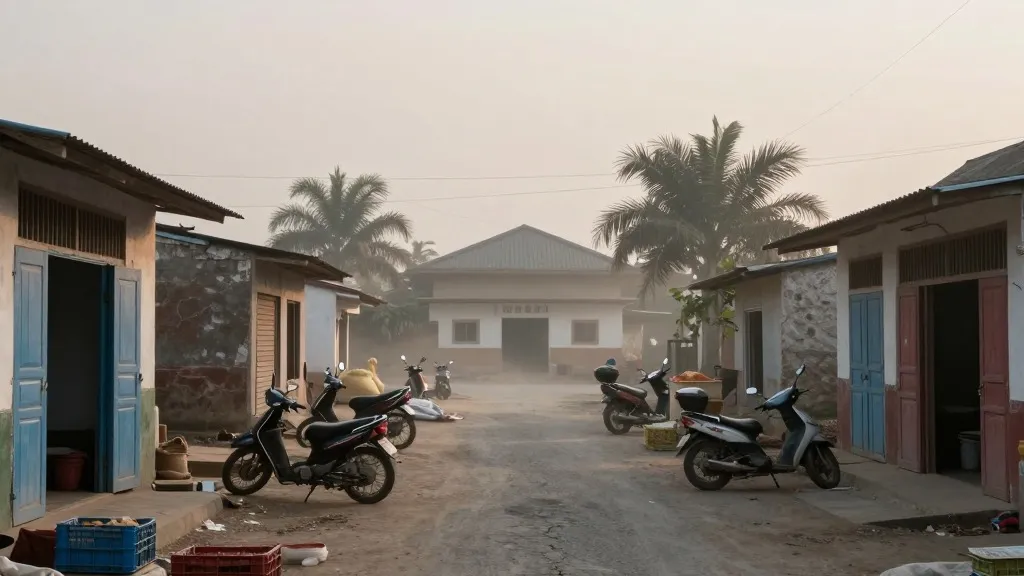
Police authorities initially announced that ten bodies had been recovered by Friday evening following the attack. The incident took place in Binnari village, where a large contingent of gunmen arrived on motorcycles to raid the settlement. During the incursion, the attackers systematically looted local shops, seizing food supplies and other goods before withdrawing from the area.
However, the official count appears to be a conservative estimate based on the information available in the immediate aftermath of the violence. Survivors of the raid have provided accounts that suggest the human cost was considerably higher than the initial police statement indicated. These testimonies paint a picture of a chaotic and deadly encounter that left many residents searching for missing family members.
Local witnesses described the timing of the assault as particularly devastating, noting that the gunfire erupted just after Friday prayers had concluded. Sa'idu Nuhu, a resident of Binnari, stated that the community counted more than twenty bodies once the attackers had departed. He further noted that some individuals remained unaccounted for, implying the toll could rise further as search efforts continue.
Isiyaku Musa, another resident, corroborated the higher death count, placing the number of fatalities at no fewer than twenty people. These local figures stand in contrast to the preliminary data released by law enforcement, highlighting the gap between on-the-ground observations and official reporting channels during fast-moving crises.
Malam Abubakar Saifullahi, a community leader, provided specific details about the composition of the attacking force. He reported that approximately fifty motorcycles were used for the assault, with two men riding on each vehicle. This logistical capability suggests a well-organized operation rather than a spontaneous skirmish. The group targeted commercial establishments, taking cash, foodstuffs, and other provisions. They also commandeered motorcycles that villagers had abandoned in their haste to flee the gunfire.
The incident has drawn sharp criticism from human rights organizations. Amnesty International issued a statement on Saturday asserting that forty people were killed in the attack. The group noted that while police initially confirmed ten deaths, additional bodies were discovered later on Saturday. The organization criticized Nigerian authorities for leaving rural communities in northern regions vulnerable to gunmen who commit atrocities with apparent impunity.
Banditry has emerged as a significant economic and social challenge in northwest and central Nigeria. Powerful gangs operate in remote areas where police and military resources are stretched thin. In Taraba, a central-eastern state, these non-ideological groups frequently raid villages, kidnap individuals for ransom, and impose levies on farmers and miners in regions where the state's presence is minimal. The Binnari attack fits this broader pattern of disruption and extraction that plagues the region's rural economy.
The violence in Taraba occurs against a backdrop of other security developments across the country. On Saturday, the Nigerian military announced that it had killed fifteen individuals it described as terrorists in an air strike within Borno State in the northeast. This operation is part of the ongoing campaign against the armed rebellion that began with the Boko Haram uprising in 2009, illustrating the multi-front nature of the security challenges facing the nation.
Source: Al Jazeera