135 Arrests Mark Escalating Cost of Living Crisis in France
Security costs and economic disruptions surge as a second weekend of nationwide protests forces a major reallocation of police resources and shifts key sporting and cultural events.
By Priya Singh ·
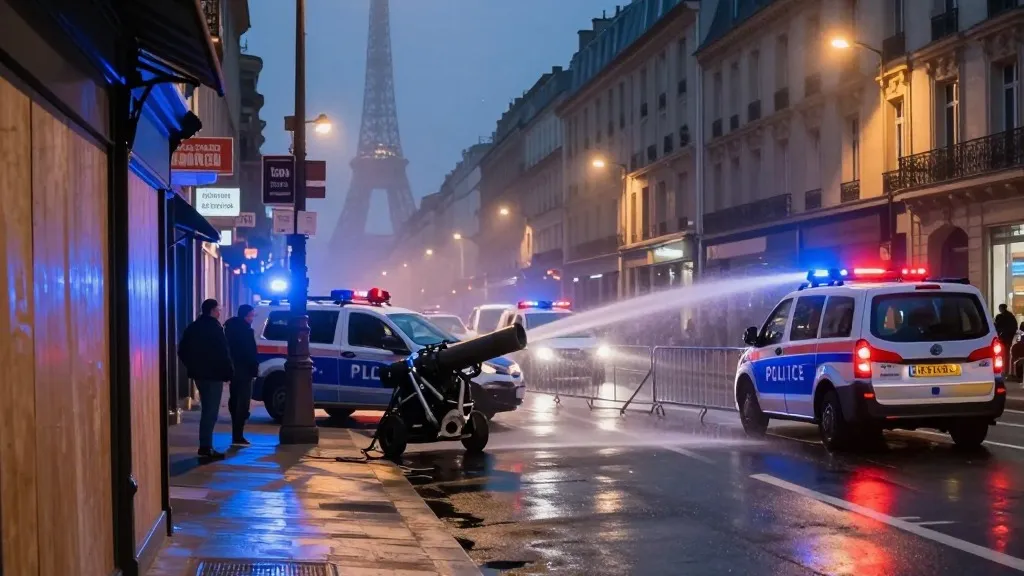
Interior Minister Laurent Nuñez reported that 135 individuals were detained during Saturday's nationwide demonstrations, a figure that underscores the significant operational cost of maintaining order in major French cities. This number reflects a sharp increase in enforcement activity as authorities attempt to manage a movement that has already disrupted the local economy and consumer confidence. The government's response involves a massive deployment of resources, with up to 70,000 officers mobilized alongside helicopters, armored vehicles, and water cannons to prevent a recurrence of the previous weekend's instability.
The current unrest follows a rapid escalation that began last month. Initial student demonstrations in the southeast of Paris for better conditions quickly broadened into a wider demand for relief from rising living costs. This momentum was further amplified by the return of the Yellow Vests, a movement that emerged roughly eight years ago to challenge the current administration. The group has announced plans for additional rallies and a sit-in outside parliament and city halls on October 31, signaling that the economic pressure on the state is likely to continue through the end of the year.
Local markets and event schedules have already felt the impact of the disruptions. In Lyon, where demonstrations were officially banned, police used tear gas to clear approximately 150 protesters who briefly blocked a central road. In Orléans, thousands marched against a political congress, with police counting 11,000 participants while organizers claimed the figure was 26,000. The event, which targeted both the current president and the leading opposition candidate, ended peacefully but highlighted the tension between political strategy and public sentiment ahead of elections in six months.
Paris experienced a more controlled environment, with authorities describing the mood as calm during the city's sole authorized march at the Porte d'Italie. However, the logistical changes created friction between organizers and the state. Union representative Murielle Guilbert criticized the decision to move the route from the Bastille to a more remote southeastern location, calling it scandalous and noting that wages have not reached expected levels. A student named Lucas told CBS Saturday Morning that it is normal for people to be angry, reflecting a broader sentiment of economic frustration.
The financial ripple effects are visible across the capital's cultural and sports sectors. Major museums remain closed, and many businesses have boarded up their windows in precaution. Art Basel, a major industry event, was forced to cancel its weekend program, operating for only one day. In the sports sector, the first NFL game in France between the New Orleans Saints and an opponent remains scheduled for Sunday, though some venues were shut on Saturday. Additionally, a soccer match between Paris Saint-Germain and Olympique Lyonnais originally planned for Sunday has been postponed to Monday night.
Looking ahead, the economic outlook remains cautious as the government balances its security budget against public demands for cost-of-living relief. The previous weekend saw approximately 3,000 shops across France damaged or looted, adding to the list of economic losses. With the Yellow Vests preparing for their next major action on October 31, businesses and investors are watching closely to see if the stability of the coming weeks will be enough to restore normal commercial activity before the political cycle intensifies further.
Source: CBS News
More Business · World news · Bad Business · Report a business · Got a Story?