Black Sea Drone Attacks Force Cargo Crews to Abandon Ships and Halt Regional Trade
A surge in maritime strikes has left over 30 seafarers missing or dead while major shipping companies pause operations due to heightened risks.
By Kenji Hassan ·
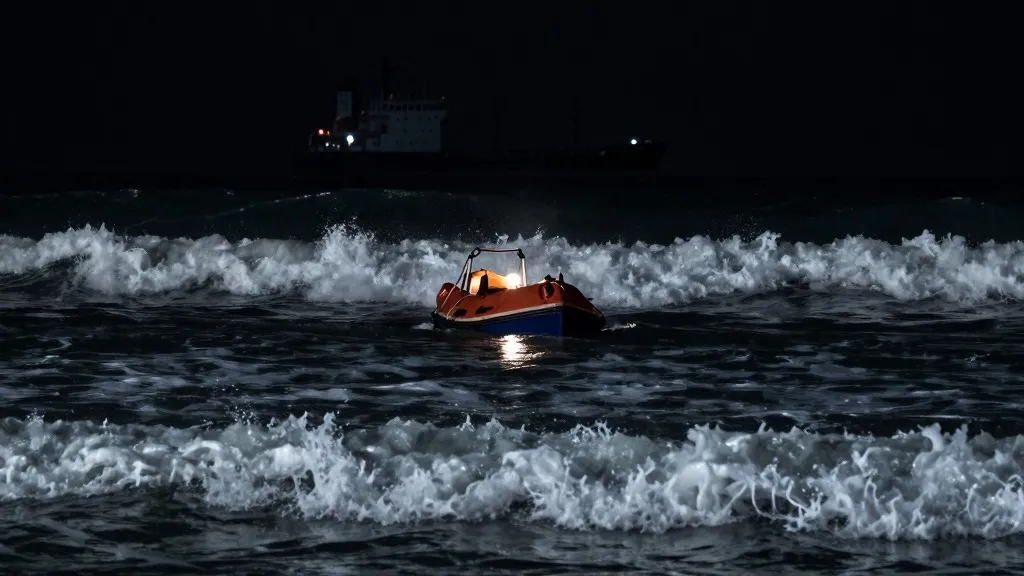
For crews navigating the Black Sea this month, the distance to safety has become dangerously short. Attacks on commercial vessels have forced many to abandon their ships in the middle of the night, leaving families waiting for news and shipping companies pausing their routes. The escalation marks a significant shift in how the war between Russia and Ukraine is impacting global trade and the livelihoods of workers who depend on these waterways.
Maritime analysts report that nearly 50 commercial vessels have been hit in the region this month. The strikes have caused a near halt to traffic in this vital corridor. NATO has increased its maritime security presence, adding more patrol boats and radar systems to the area. Despite these measures, at least 31 seafarers have been killed or remain missing. Many of the recent incidents have occurred in the western part of the sea, close to the coasts of NATO members Bulgaria and Romania.
Data from the risk firm Ambrey indicates that more than 500 attacks have occurred in the Black Sea and Sea of Azov this year. The firm believes Russia was responsible for 40 of the 45 attacks recorded in October. The Russian Ministry of Defence has acknowledged striking dozens of ships, citing support for Ukraine’s military as the reason. However, shipping companies argue that many of these vessels were engaged in legitimate commercial trade, such as loading grain.
The human cost of these strikes is becoming clearer. On the cargo ship HS Dignity, a sea drone struck the hull just before 2 a.m. on Oct. 13. The crew of 16, consisting of Syrian and Egyptian nationals, was forced to abandon the sinking vessel. Chief officer Ashraf Mamdouh described how a boat approached the group in the dark. The crew initially thought it was rescuers, but they realized it was part of the attacking group. A drone then rammed the ship, preventing them from finishing the launch of their lifeboats.
Survivors faced strong winds and currents that pulled them apart. Mamdouh spent four hours in a drifting life raft before another ship, the Azov Concord, spotted his phone flashlight. He is one of five survivors from the Dignity. Eleven crew members are still missing, including 18-year-old Hamza Suleiman, a Syrian on his first voyage. His father, Basel, said his son had expressed fear after a previous attack on another ship. Mamdouh told the father he last saw Hamza wearing a life jacket, a detail that offers some hope.
Shipping companies are responding to the risk by scaling back operations. Turkey-based ED Shipping has laid up 19 of its 26 vessels. Chief financial officer Demre İşcen stated the company is losing millions of dollars each month. The Philippine government has also barred its citizens from boarding vessels in the northern Black Sea. Khaldoun Nabelsi of the Syrian Seafarers Association said at least 18 Syrian seafarers have been killed. He noted that while no one is forced to take these jobs, economic necessity often drives workers to the sea.
The surviving crew of the Dignity are now in Bulgaria waiting for new documents to return home. Mamdouh said he will not return to the Black Sea again. The ongoing uncertainty and high casualty rates suggest that the risks for working families in the maritime sector will remain elevated for the foreseeable future.
Source: CBC News