Brooklyn Stores Vacant at 12.3 Percent as Officials Target Affordability
City agencies awarded $43 million in contracts in fiscal 2026 to support small firms amid rising rents and persistent storefront gaps in Brooklyn.
By Priya Singh ·
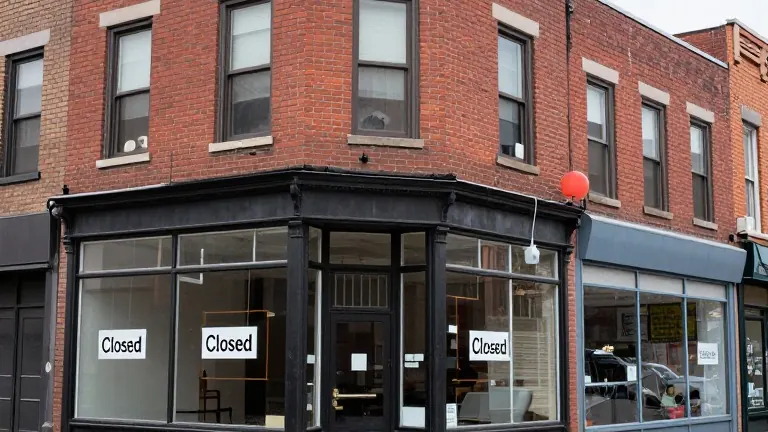
A report from New York City Comptroller Mark Levine released in June 2026 places Brooklyn's storefront vacancy rate at 12.3 percent. This figure makes the borough the second highest in the city, trailing only Manhattan. The number exceeds pre-pandemic levels and has remained elevated despite recent intervention efforts.
Officials and business leaders addressed these figures on Oct. 22 at Brooklyn Borough Hall. Women Who Influence hosted the 2026 Pink Apple Awards and The Power Seat panel. The event brought together women entrepreneurs and economic leaders to discuss strategies for keeping small businesses operational in a tight market.
The vacancy issue is concentrated in specific neighborhoods. Parts of Ocean Hill, East New York, Bedford-Stuyvesant, and Crown Heights report vacancy rates above 15 percent. Jeanny Pak, chief operating officer of the New York City Economic Development Corporation, noted that empty storefronts often form in clusters. This pattern creates ongoing vacancies driven by high rent and the lack of commercial rent stabilization.
Delia Awusi, appointed New York City mom-and-pop czar by Mayor Zohran Mamdani in April 2026, identified affordability as the primary barrier. She stated that small business owners face increases in rent, utilities, and insurance that are difficult to sustain. Payroll costs and limited access to funding after the initial launch phase also contribute to the problem.
Gabrieline Reece, who founded Women Who Influence in 2021, emphasized that financial strain affects businesses regardless of customer loyalty. She said, “A business can have great products, loyal customers but still struggles with rent, inventory, payroll and delay in payments.” Reece reported that 68 percent of the businesses her organization surveyed cited access to resources as a barrier to success.
The New York City Economic Development Corporation is implementing funded programs to address these gaps. Pak said the agency is providing networking and educational opportunities through initiatives like Women.NYC and ConstructNYC. In fiscal 2026, the agency awarded $43 million in contracts and provided capacity building and training to 61 firms.
Pak described the economic stakes of these challenges. She said, “When women- and minority-owned businesses cannot grow, our neighborhoods lose jobs, investment and opportunities to build wealth. These are not just individual challenges, these are economic challenges and they require solutions that address the barriers themselves.”
The Oct. 22 ceremony recognized three individuals for their community impact. Pamela Morgan, co-chair of the NGO Committee on the Status of Women, received a Pink Apple award. Kanchana Suggu, senior vice president and chief impact officer of the United Way, and Dr. Erica Ford, CEO and founder of LIFE Camp, also received honors.
Additional support mechanisms include the Yard Opportunity Shop at the Brooklyn Navy Yard. This program was funded by a grant from Brooklyn Borough President Antonio Reynoso. It aims to create affordable access to retail space for small, women- and minority-owned businesses. Kitty Chan, deputy commissioner of business services, noted that many businesses are unaware of resources such as the Department of Small Business Services.
Reece said her organization aims to facilitate the process of connecting businesses with these resources. She said, “There are a lot of small businesses out in New York, and they're asking these questions. And we want to be a part of the process to move things forward. It’s a slow conversation, but once it starts going, you definitely will see the work come to life.”
Source: BK Reader
More Business · Bad Business · Report a business · Got a Story?