New home site prep costs range from $3,800 to over $40,000
National averages hide the true expense of excavation and grading, which can exceed $25,000 for difficult terrain or deep basements.
By Leila Santos ·
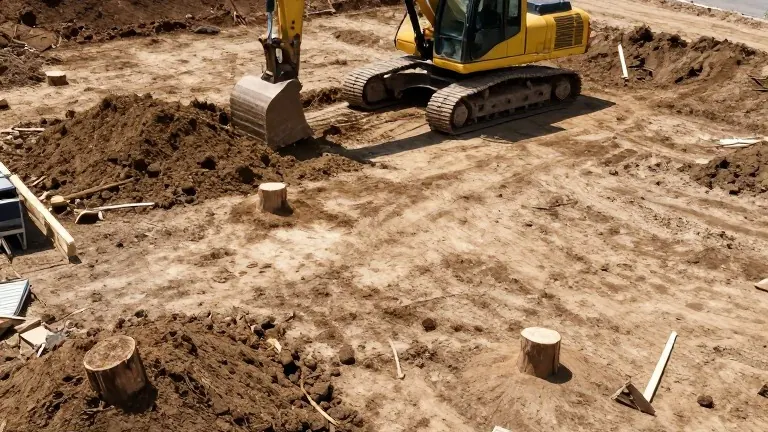
Preparing land for residential construction involves more than removing vegetation. Workers must create suitable conditions for foundations, construction equipment, drainage, and utility installation. According to 2026 cost estimates published by Angi, general site preparation averages approximately $3,800 nationally. Its reported range of $1,300 to $5,600 covers projects with varying scopes.
A complete new-house project can require substantially more work. Foundation excavation alone may cost $1,500 to $10,000, with difficult projects exceeding that range. A relatively straightforward residential lot may require $3,000 to $8,000 for basic preparation, while a more involved project can cost $10,000 to $25,000. Difficult terrain, extensive clearing, or deep basement excavation can push expenses beyond $40,000.
The final bill depends on what lies beneath the grass. Tree roots, buried rock, unstable soil, and poor drainage can turn an inexpensive parcel into an expensive construction project. Soil composition and underground obstacles drive the largest cost differences. Contractors price the work according to equipment time, material movement, labor, and project risk. Sandy soil, compacted clay, loose fill, and bedrock behave differently during excavation. Rock may require specialized breaking equipment rather than ordinary digging.
Slope and drainage introduce additional expenses. A flat construction site generally requires less earthmoving than a steep hillside. Sloped properties may need cut-and-fill operations, engineered compaction, or retaining structures. Poor drainage requires water to be directed away from the future foundation without damaging neighboring properties. Access and local labor rates also affect the total cost. Large excavators work efficiently when trucks can reach the site, but narrow gates or soft roads complicate logistics.
Budgeting requires separating land clearing, grading, and foundation excavation. A low initial quote may exclude hauling, drainage, and testing. Homeowners should obtain three itemized contractor bids and reserve contingency funds before construction begins. A hypothetical 2,000 square foot house on a moderately wooded suburban parcel illustrates the potential costs. The preliminary budget includes tree removal, drainage improvements, and excavation. This illustrative calculation excludes foundation construction, utility connections, permits, and other expenses.
Administrative requirements add to the financial burden. Municipalities may require grading permits, approved site plans, tree-removal authorization, or erosion controls. Under federal stormwater rules, construction disturbing one acre or more generally requires applicable permit coverage when regulated stormwater discharges occur. Smaller sites can also qualify when part of a larger common development. State and municipal rules may be stricter, with Pennsylvania, Florida, and California administering construction-related requirements through different regulatory systems.
A proper site assessment should happen before the purchase becomes irreversible. The purchase price of land reveals little about construction readiness. A parcel costing $60,000 can be more expensive to develop than a prepared lot priced at $80,000. The cheapest land is not necessarily the cheapest place to build. Early testing can reveal rock, groundwater, or unsuitable fill, allowing homeowners to make informed decisions before contracts are signed.
Source: Baltimore Chronicle
More Business · Bad Business · Report a business · Got a Story?