Chef Ranji Smile opened the first US Indian restaurant in 1901
The chef’s venture at 325 Fifth Avenue closed within a year, but his performance style influenced the next wave of Indian dining in America.
By Priya Singh ·
One hundred and twenty-five years after Ranji Smile opened what was almost certainly the first Indian restaurant in the United States, his legacy persists in the thousands of Indian eateries across the country.
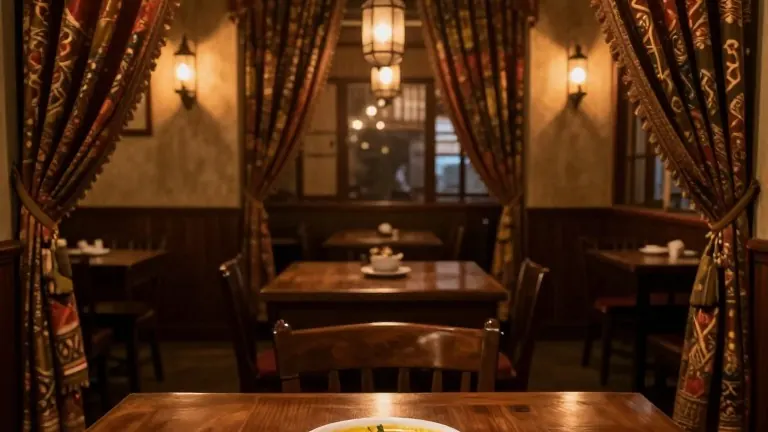
In late 1901, Smile launched Omar Khayyam at 325 Fifth Avenue in New York City. The location sat one block from the original Waldorf-Astoria Hotel. The venue featured Indian draperies and hanging lanterns. A staff of Indian waiters wearing voluminous turbans served customers alongside a group of musicians.
Smile arrived in New York in the summer of 1899 from London. He had previously worked as a curry cook at the Cecil and Savoy hotels in London. Louis Sherry, the owner of Sherry’s Restaurant on Fifth Avenue, invited him across the Atlantic to join his kitchen. Sherry’s catered to wealthy New York families and was known for theatrical dining experiences.
At Sherry’s, Smile dressed in a satin coat and a blue silk turban. He performed salaams for customers and asked if they preferred their curry hot or mild. Newspaper headlines at the time noted that New York women went wild over him. He served dishes such as Bombay duck and a creation called Lettuce Ceylon.
Smile secured financial backing from Roland R. Conklin, a financier and inventor of an early motorhome. Before opening Omar Khayyam, Smile traveled to Bombay. He claimed he was a guest at the upcoming coronation of King Edward VII in London. He recruited a group of staff including valets and a dancing girl.
A federal case later alleged that Smile illegally trafficked this staff into the United States to work at his restaurant. The New York Sun reported that customers had tired of Indian food within a year of Omar Khayyam opening. The restaurant closed shortly after its launch.
Smile continued to build his persona after the restaurant failed. He claimed to be the son of the emir of Baluchistan. He later described himself as the brother of the great Beglerberg of Baluchistan. He married a series of young American women and promoted Indian food as a secret elixir for female beauty.
He performed cooking demonstrations in Washington, D.C., and Chicago. In Washington, he prepared a dessert called bungalow while a juggler and dancing girl entertained the crowd. By the 1920s, Smile listed his occupation as a merchant. The last recorded evidence of him dates to 1937, when his fourth or fifth wife filed for an annulment in New York Supreme Court.
Other immigrants followed Smile’s path. In 1909, Saint Nihal Singh published Indian recipes in the Chicago Daily Tribune. He suggested readers use hamburger meat as a substitute for gosht pilau. KY Kira, a dancer from Ceylon, opened the Ceylon India Inn in Harlem in 1913. That restaurant remained in business until the late 1980s.
Source: Casualty