France's Schools Crisis Escalates as Marchers Clash with Police
A nationwide movement over aging infrastructure and police tactics has turned into a major social test for the current administration.
By Kenji Hassan ·
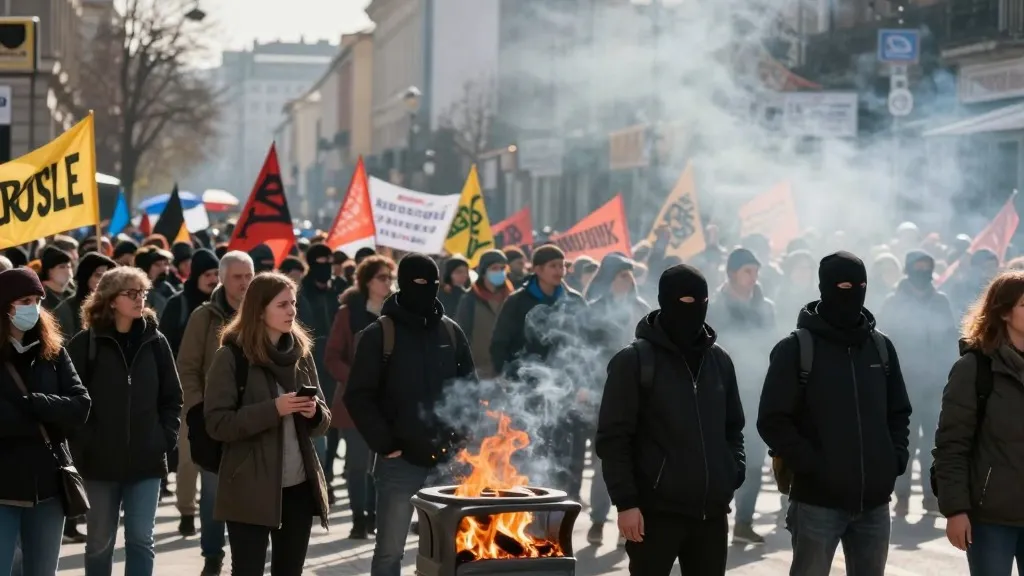
The central tension in French politics has shifted from policy debates to physical confrontation on the streets. Hundreds of thousands of demonstrators took to the roads on Saturday, united by a desire to fix crumbling school infrastructure and reduce the presence of riot police. This collective action places President Emmanuel Macron at the center of a growing social crisis during the final stretch of his presidency. The gathering was not just about education. It was a broad expression of frustration regarding the cost of living and what many viewed as an excessive use of force by state security forces.
The unrest did not appear overnight. It began in mid-September when high school students aged 15 to 18 started organizing. Their initial complaints focused on missing teachers, leaking roofs, and classrooms so overcrowded that some students lacked chairs. What began as a student-specific grievance quickly expanded. Trade unions, teachers, and parents joined the ranks, transforming the effort into one of the largest youth-led movements in recent history. The situation escalated sharply the previous weekend. Despite the crowds remaining calm, that day saw some of the most intense violence in years. Public buildings were set on fire, hundreds of shops were looted, and authorities arrested at least 2,700 people.
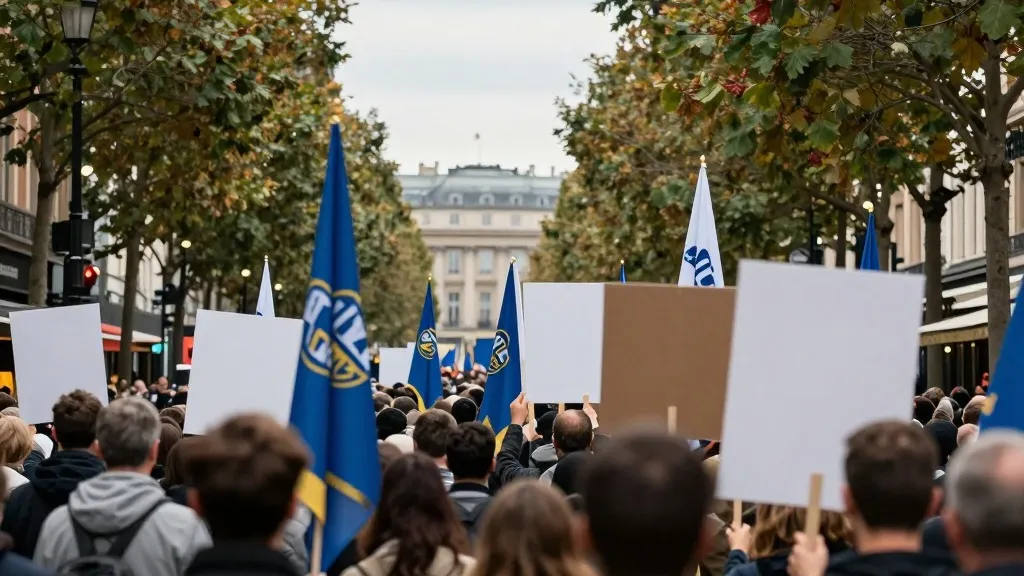
On Saturday, the government estimated that at least 400,000 people participated in marches across the country. Trade union leaders believed the number was actually double that figure. In Paris alone, official counts placed the crowd at 110,000 along the city's eastern boundary. The atmosphere in the capital remained relatively calm for much of the day. Brass bands played music, and families with young children walked together. Banners waved through the air with messages like "Oppression breeds rebellion" and "The right to protest." However, the mood shifted near Porte de Vincennes. Groups of masked individuals, many dressed in black and seemingly distinct from the main crowd, threw stones and glass bottles at officers. Police responded with water cannon, teargas, and stun grenades. Similar clashes occurred in Lyon, Lille, Montpellier, Nantes, Toulouse, and Marseille, where trash bins were set alight.
The government deployed over 70,000 police officers to manage the event. Many shops boarded up their windows, and numerous museums closed their doors to the public. This heavy security footprint was a direct response to the chaotic events of the prior week. Authorities also enforced rules that banned demonstrations not organized by recognized unions, labeling them illegitimate. These restrictions kept many groups out of central city squares. Nadège, a 43-yearold communications worker who was teargassed last weekend, explained her presence on the streets. She stated that she was there to defend the legal right to demonstrate. A 21-yearold science student, whose faculty was currently blockaded, described the current political climate as increasingly authoritarian.
Looking ahead, the conflict appears set to continue. Jérôme Rodrigues, a prominent figure from the 2018 and 2019 yellow vest movement, warned that the government is afraid and trying to push protesters to the periphery. He predicted that demonstrations would return every weekend. In Orléans, thousands of people marched against a congress of the National Rally party, shouting slogans demanding the resignation of Macron and the imprisonment of Marine Le Pen. Interior Minister Laurent Nunez reported that 135 people were arrested nationwide. Confiscated items included slingshots, metal balls, a katana, and airsoft weapons. As the government steps down from power next year, the pressure to resolve the school crisis and manage public unrest will only intensify.
Source: The Guardian