Researchers Identify 84 New X-ray Sources in Nearby Galaxies
Astronomers at the University of Alabama discovered faint signals previously overlooked in Chandra telescope data, suggesting new types of dense stellar systems.
By Priya Singh ·
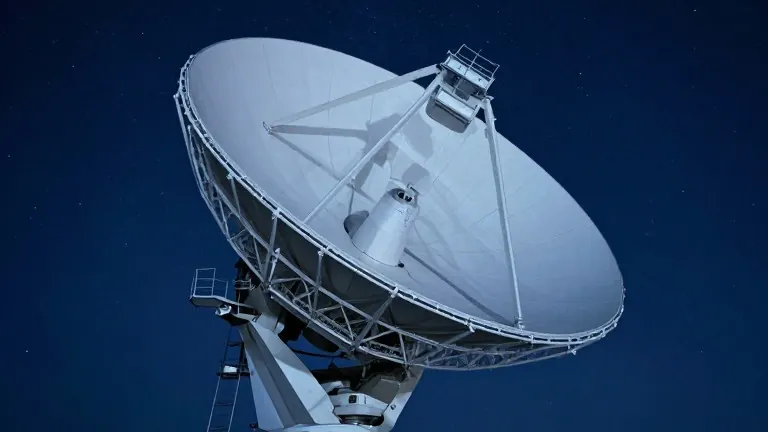
Astronomers at the University of Alabama have identified 84 new sources of low-energy X-rays across six nearby galaxies. Jimmy Irwin, an astronomer at the university, and his doctoral student Mustafa Muhibullah made the discovery by analyzing data from NASA's Chandra X-ray Observatory. The telescope has collected observations of these regions since 1999, but the researchers focused on a specific energy range that had been largely ignored by previous studies.
Muhibullah initially suspected the signals were digital artifacts. "I was initially thinking this could be digital artifacts. They can't be real," he said. The team confirmed the signals are genuine, publishing their findings in the journal Nature Astronomy. The sources are extremely hot, reaching temperatures of hundreds of thousands to millions of degrees, a result of super high gravity or explosive forces.
The research team proposed that the X-rays originate from systems involving super-dense objects, such as black holes. Irwin described these objects as similar to vampires, noting that they steal material from a companion star. As the material spirals toward the compact object, it heats up and emits the detected X-rays. Another possibility is a system where two black holes orbit one another, pulling matter from a star to create a doughnut-shaped void recently termed a zombie disk.
In a separate study published in Science Advances, Luke Rosedahl of Florida Atlantic University found that large physical movements can accelerate learning. During the pandemic, Rosedahl played virtual reality games and wondered if big movements helped with category learning. He tested this by having participants wear VR goggles and sort striped objects. Some participants pressed buttons, while others swung lightsabers or punched response boxes.
Participants who made larger movements learned to categorize the stripes four to six times faster than those who used buttons. Rosedahl noted that the difference was substantial. The findings suggest that virtual reality could be used for complex training scenarios, such as helping TSA agents sort bags or radiologists examine mammograms, though further research is required to confirm these applications.
Researchers at Caltech and Cedars-Sinai also reported a new role for the amygdala in memory formation. Ueli Rutishauser, the lead researcher, studied patients with epilepsy who had electrodes implanted in their brains. The team measured neuron activity while participants viewed images of houses and faces. They found that the more amygdala neurons fired during image viewing, the more likely the participants were to remember the image later.
The study, published in Nature Neuroscience, marks the first time scientists have shown the amygdala acts as a control center for visual memory in humans, independent of emotional responses. Denise Cai, a neuroscientist at Mount Sinai who was not involved in the work, stated that this finding builds on prior rodent models. Understanding this mechanism could lead to better treatments for memory disorders such as Alzheimer's disease and epilepsy.
Kristen Dage of the Curtin Institute of Radio Astronomy in western Australia, who was not part of the X-ray study, expressed surprise at the new discoveries. "I never would have guessed that these sources would be there," Dage said. The researchers noted that some of the newly found X-ray sources may eventually explode as supernovae, a phenomenon astronomers can use to measure the expansion rate of the universe.
Source: WYPR