Campus Security: Hopkins Students Question Delayed and Vague Safety Alerts
A review of recent incidents reveals gaps in timeliness and detail within the university's Clery Act compliance communications.
By Leila Santos ·

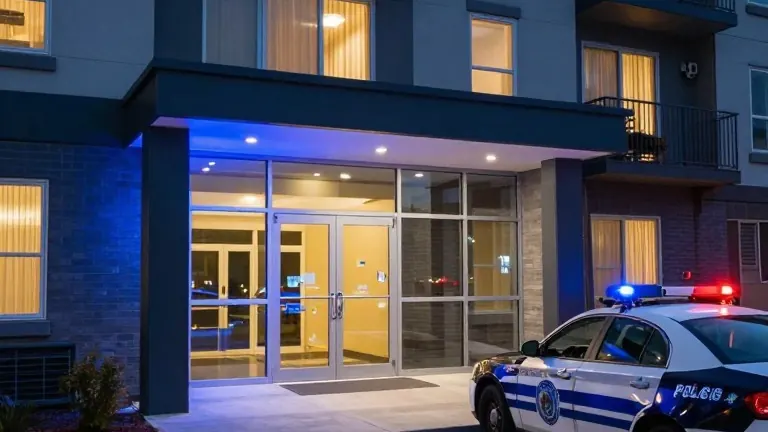
Students at Johns Hopkins University received a potentially armed man alert nearly four hours after witnesses first saw the suspect inside an on-campus housing building. The incident on Sept. 25, 2026, highlights growing frustration among residents regarding the speed and specificity of official safety communications.
The University’s Office of Public Safety emailed students at 6:43 p.m. that day about the man attempting to enter The Academy. However, one resident reported seeing the individual inside the building as early as 2:40 p.m. Informal posts on the student messaging platform Sidechat warned of an armed suspect well before the official notice went out. Neither the email nor subsequent updates confirmed whether the man actually possessed a weapon.
Delays in alert distribution have occurred on other occasions. On July 11, 2026, a university affiliate reported a threat of physical violence near the 3200 block of St. Paul Street at 5:30 p.m. The official "Assault by Threat" advisory did not reach students until 9:06 a.m. the following morning, a gap of more than 15 hours. While the university may withhold details during ongoing investigations, the lack of consistent timing standards leaves students uncertain about the reliability of these notifications.
The content of recent alerts has also drawn criticism for lacking descriptive detail. An Oct. 4, 2026, notice regarding a store incident on West 39th Street described a 60-year-old male suspect armed with a pocketknife and a 30-year-old female suspect with no further description. A separate Oct. 14, 2026, alert about an inappropriate touching on North Calvert Street identified a 5-foot-8 male in his 40s wearing black clothing but offered no indication of the suspect's direction of travel or the status of the joint search by university and Baltimore police officers.
Location descriptions in text alerts can also be confusing. A Sept. 25, 2025, RAVE alert regarding an incident on St. Paul Street used the phrasing "in the area of St Paul and 34 Street." Students noted that this description better matches the block between McCoy and Wolman Halls, a distinction that requires a map to decode during a time-sensitive notification.
The university also did not send a communication regarding a Fall 2025 incident where a female broke into the AMR II residence during Family Weekend. Multiple sources told The News-Letter that resident advisors told students to lock their doors after non-affiliates entered the building. The university declined to comment on the specific account, which described the individual as potentially intoxicated and wearing paper towels on her feet.
Peer institutions provide additional context in their own alerts. Massachusetts Institute of Technology includes available photo or video footage of suspects, while Stanford University includes race in its descriptions. The University of California, Berkeley, defines specific crimes in its warnings to help students understand the legal and personal impact of incidents. Hopkins, which operates more than a thousand security cameras, currently relies on textual descriptions that omit these extra identifiers.
The Jeanne Clery Campus Safety Act requires institutions receiving federal financial aid to report campus crimes and issue timely warnings for serious or ongoing threats. The university's current system technically complies with these legal requirements for locale and timing. Nevertheless, students argue that the current format limits their ability to recognize threats and make informed decisions about their safety in real time.
Source: The Johns Hopkins News-Letter