Four days: the deadline Gulf states propose to reopen the strait of Hormuz
A new diplomatic framework links the reopening of the critical waterway to Houthi withdrawals in Yemen and seeks to avert a renewed war between the US and Iran.
By Leila Santos ·
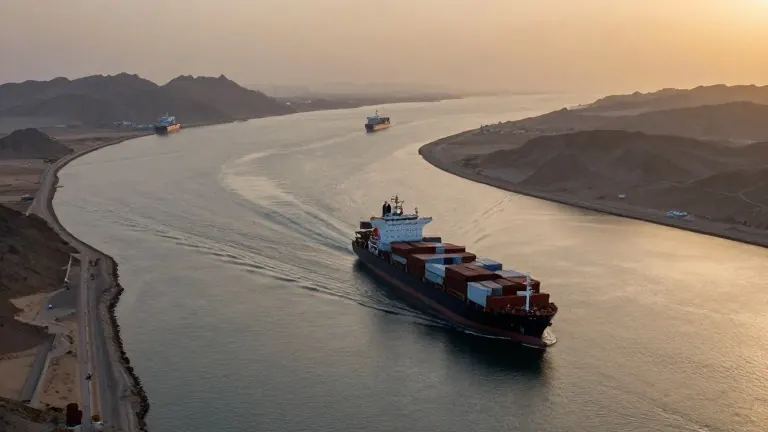
Negotiators from six Gulf states are finalizing a comprehensive peace agreement that sets a four-day deadline for the strait of Hormuz to reopen once economic sanctions are lifted. This timeline serves as the central mechanism in their effort to prevent a renewed conflict between the United States and Iran.
The proposal requires a simultaneous withdrawal of substantial Houthi forces from within Yemen. Dr. Ali Bagheri, the deputy secretary of Iran’s national security council, confirmed that Iran is prepared to shorten its previous demand for a seven-day waiting period to the proposed four-day window. This adjustment represents a concrete step toward closing the gap between the two sides.
European diplomats argue that a breakthrough with President Donald Trump requires Iran to allow UN weapons inspectors back into the country. These officials view access to recently bombed nuclear sites as a minimum requirement for any final deal. British Foreign Secretary Ed Miliband urged Iranian Foreign Minister Abbas Araghchi to agree to this condition during their meeting in New York. However, Iran has so far refused, stating it will only engage in principle-based talks regarding its nuclear program.
Iran remains primarily focused on securing guarantees for sanctions relief in exchange for reopening the strait. In a related development, Mohsen Rezaei, the secretary of Iran’s supreme national security council, met with Houthi ambassador Ibrahim al-Dulaimi on Tuesday. This meeting occurred one day after a high-level delegation from Saudi Arabia, Turkey, and Pakistan traveled to Tehran. The Houthi movement is demanding that Saudi Arabia lift what it considers a naval and air blockade of its territory.
Iran successfully kept its nuclear program off the agenda during the trilateral talks with the Gulf and regional powers. Instead, the discussion centered on a long-term regional security vision that would include the Gulf states and Iran while reducing or ending the US military presence in the Middle East. This framework aims to replace the isolation Iran has faced since the 1979 Islamic Revolution with a non-aggression pact involving all Gulf neighbors.
Oman’s foreign minister, Badr Albusaidi, described the potential economic benefits of such an inclusive security arrangement. He stated that having eight countries at peace would create enormous economic potential for the region and for outside partners who choose to participate. He noted that there is general acceptance that this will be the direction of travel once a final deal is reached.
Abbas Araghchi emphasized the priority of this new security pact during a televised address in Iran earlier this week. He said, “Recently, there has been talk of a new war but I am already thinking about the postwar period. Whether there is war or not, our policies remain the same.”
Source: The Guardian