Netanyahu Leads Likud to 28 Seats, But No Bloc Reaches Majority in Israeli Election
With a record 77.7% turnout, the divided Knesset leaves the path to the next prime minister open among three complex coalition scenarios.
By Leila Santos ·
Prime Minister Benjamin Netanyahu’s Likud party is projected to win 28 seats in Israel’s parliamentary election, held on Tuesday. Despite this top result, early counts indicate that no political camp has secured the 61 seats necessary to form a government. The outcome leaves the identity of the next prime minister uncertain while vote counting continues.
Gadi Eisenkot, the former army chief and leader of the Yashar party, trails Likud with approximately 22 seats. His allied change bloc is projected to hold roughly 47 seats, a number well below the majority threshold. Arab parties, which both major camps have pledged to exclude from a governing coalition, are on track for at least 17 seats combined. This bloc could prove decisive in any effort to remove Netanyahu from power.
Formal consultations in which parties will recommend a prime ministerial candidate to President Isaac Herzog are expected to begin next week. Analysts have identified three primary paths forward. The first involves a government formed by the change bloc and Arab parties. Every party in the change bloc except the Democrats, led by Yair Golan, campaigned against sitting with Arab factions. However, Mansour Abbas, leader of the Islamist Ra'am party, is again offering to cooperate. Yohanan Plesner, president of the Israel Democracy Institute, noted that while this option is mathematically feasible, it breaks campaign promises and faces public resistance following the October 2023 attacks.
A variation of this first scenario is a minority government composed of Yashar, B'Yachad, Yisrael Beiteinu, and the Democrats. This group would rely on Arab factions for external support on key votes, potentially reaching 65 seats. Avigdor Lieberman has rejected this idea, though Bar-Ilan University Professor Jonathan Rynhold suggested he might agree if he became prime minister. The Arab parties may demand concessions that Eisenkot would find difficult to accept.
The second scenario is a unity government. Plesner stated that serious negotiations for such an arrangement are likely. He suggested Netanyahu might retain his right-wing and ultra-Orthodox allies while pulling in one change bloc party. Change bloc parties would likely demand the exclusion of a far-right or draft-resistant ultra-Orthodox party. Plesner indicated the public might accept a centrist-leaning result, though many voters who supported replacing Netanyahu might feel betrayed.
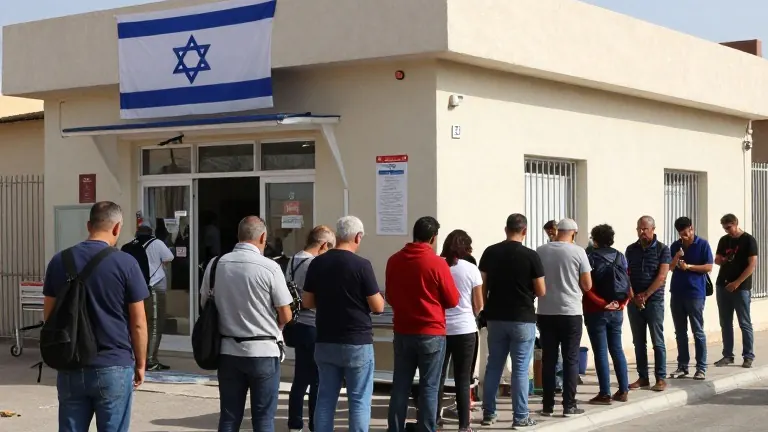
The third scenario is a repeat election. Eisenkot described a new vote as a mistake given the high turnout. Election officials reported a 77.7% participation rate, the highest since 1999. Gideon Rahat, a political scientist at the Hebrew University of Jerusalem, said entrenched political camps make new elections plausible. Plesner warned that resolving the deadlock may take weeks or months, leaving Netanyahu in place as interim prime minister during the negotiations.
Source: The Jerusalem Post