Northern Virginia's Data Center Plans: A Strategic Retreat
Amazon has abandoned its proposal to build four new AI facilities in Loudoun County, opting instead for residential and mixed-use development after intense local opposition.
By Kenji Hassan ·
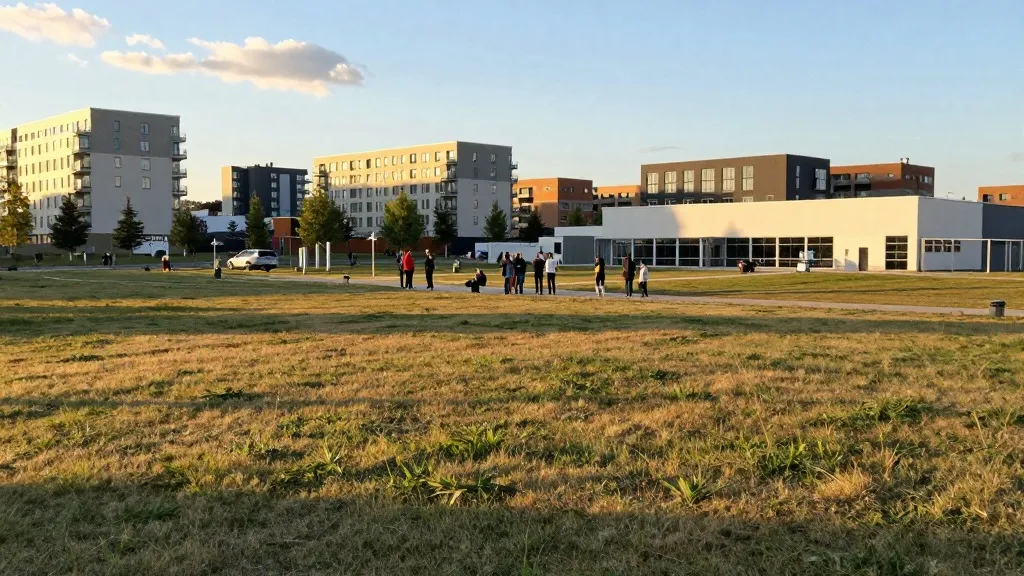
In a significant shift for one of the region's most contested technology projects, Amazon has formally withdrawn its proposal to construct four new data centers on a 122-acre parcel in Loudoun County. The company will now repurpose the majority of the site, which formerly housed the George Washington University campus, for mixed-use and residential development. This decision marks a definitive end to the planned expansion of artificial intelligence infrastructure at that specific location, signaling a major change in how hyperscalers approach land acquisition in Northern Virginia.
The new plan includes a substantial community component. Amazon will donate 25 acres of the property to Loudoun County for the construction of a community arts center and a new recreational facility. Additionally, the company has committed a $5 million contribution to the county's housing fund. These concessions appear designed to address the primary grievances held by local residents, who had voiced strong opposition to the original data center proposal. The move effectively swaps server racks for housing units and public spaces in a county already known for its high density of tech infrastructure.
Loudoun County, often referred to as Data Center Alley, holds the largest concentration of data centers on the planet. While the area has long been a hub for such facilities, recent community sentiment has shifted. Residents expressed deep concern over the noise levels generated by cooling systems and the immense power requirements of the buildings. These factors contributed to a changing approach by county officials toward new buildouts. The pressure was palpable enough that Amazon first submitted its proposal in July, only to face a meeting in September with county leadership that suggested an alternative use for the land might be preferable.
Josh Weissman, Amazon’s vice president for data center development, explained the company’s reasoning in a statement. He noted that the firm initially moved quickly to secure the former university campus when the opportunity arose. However, Weissman acknowledged that the company carefully weighed the county’s pointed concerns about development at this particular site. He stated that while Amazon viewed the legal development potential differently than the county did, they concluded that a shared vision was better than engaging in costly litigation. This pragmatic approach allowed both parties to avoid a prolonged legal battle.
The decision comes amid a broader national debate regarding the environmental and economic impact of AI infrastructure. The rapid expansion of cloud services and AI models has driven demand for larger facilities, but local communities are increasingly wary of the consequences. These include spikes in electricity prices and strain on local resources. In the days leading up to this announcement, President Donald Trump called on data center builders and AI hyperscalers to pay local communities a dividend due to energy-related price increases. He further suggested that these facilities should generate their own electricity and sell excess power back to the grid, highlighting the growing political focus on the sector.
Phyllis J. Randall, the chair of the Loudoun County Board of Supervisors, framed the agreement as a success of collaborative governance. In a statement, she emphasized that choosing dialogue over reflexive disagreement created a valuable opportunity for the county. Randall highlighted that the new agreement provides residents with places to gather, create, and play. Most importantly, she noted, it will provide more attainable homes for working families. This perspective contrasts with earlier fears that the land would be consumed entirely by industrial tech infrastructure.
There are, however, open questions and caveats surrounding the outcome. While the immediate conflict has been resolved, the underlying issue of power grid capacity remains a critical challenge for the region. Critics argue that the power grid in Northern Virginia has little remaining capacity, making it difficult to connect new energy-hungry facilities without significant infrastructure upgrades. The decision to build residential units instead may alleviate some noise complaints, but it does not solve the fundamental energy constraints that have plagued the area. The long-term impact on local utility rates and grid stability remains to be seen.
Furthermore, the financial implications for Amazon are complex. While avoiding litigation costs and gaining community goodwill has value, the company forgoes the immediate revenue potential of a major AI data center. The shift to residential development may offer a different return on investment profile, but it also reflects a broader trend where tech giants are becoming more sensitive to local political climates. As the construction plans move forward, residents will be watching closely to ensure that the promised amenities and housing benefits materialize as described in the new agreement.
Source: Tom's Hardware · original report published
More Business · Bad Business · Report a business · Got a Story?