One Chef's 1998 Decision to Ditch Red Sauce Reshaped Philly's Italian Dining
Marc Vetri's early struggles with diners expecting meatballs and eggplant parm led to a culinary shift that influenced a generation of local chefs.
By Kenji Hassan ·
In 1998, Marc Vetri opened his first Philadelphia restaurant with four tables and a menu that confused the locals. He had to step outside onto Spruce Street to calm his nerves, watching other full houses serve the dishes his customers kept asking for: eggplant parm and meatballs. "I'll be right back," Vetri told his partner, Jeff Benjamin. He walked into the October night, down Spruce and up Broad, wondering if the two would make it. The local standard was red gravy, a style Vetri had grown up on but was trying to replace.
Vetri, who now spends summers in Boulder, Colorado, says those first months were horrible. He would return to the kitchen from his stress walks, and Benjamin would yell at him to stop looking at other restaurants. Vetri had moved from Los Angeles to stage at a restaurant in Bergamo, Italy, where he tasted casoncelli. The pasta was filled with salumi, raisins, and cookies, and glossed in sage butter. Vetri calls it a "holy-shit moment" because the dish was so different from the tomato-heavy cooking of his Sicilian grandparents in Philadelphia.
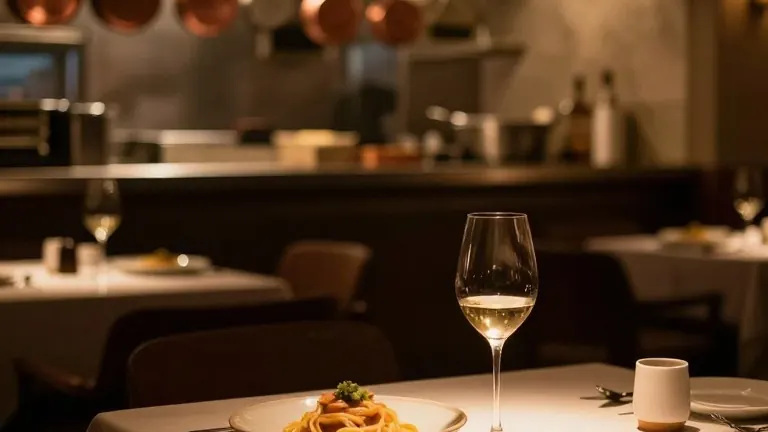
He brought that Northern Italian style to his Spruce Street townhouse. The menu featured casoncelli, wild-boar ragù, and almond tortellini. Diners who wandered in off the street were incredulous when told the food was from Italy, because they associated Italy with the red sauce they knew. Vetri, a Food & Wine Best New Chef in 1999 and a James Beard Best Chef: Mid-Atlantic in 2005, proved that Philadelphia could support a different kind of Italian food. His restaurant, simply called Vetri, became one of the city's most sought-after reservations.
The impact of that 1998 opening spread through the local restaurant scene. Chefs who trained in Vetri's kitchen now lead some of the city's most prominent restaurants. Joey Baldino, who worked at Vetri before opening Zeppoli in Collingswood, calls Vetri's effect transformative. "Before Vetri opened, I had never been exposed to real Northern Italian cuisine," Baldino says. He still uses techniques learned at Vetri in his own kitchen, which specializes in Sicilian dishes.
Kristina Burke, whose late husband Jim Burke was on Vetri's opening team, describes the move as necessary. "Philly needed to know there was more than Italian American red-sauce cooking and dining," she says. Other chefs used words like revolutionary and historic to describe the shift. The original Vetri menu influenced dishes at Osteria, James, and Cantina la Martina. Dishes like Jeff Michaud's chicken-liver rigatoni and Jim Burke's duck ragù tagliatelle carried the watermark of Vetri's early experimentation.
The style has evolved since then. At Vetri's new restaurant, Fiorella, chef Matt Rodrigue serves a dish that blends the old and the new. In July, he plated slick caramelle with sweet corn, ricotta, and huitlacoche. The dish represents a new era that is neither traditional red-gravy cooking nor the rarefied Northern Italian style of 1998, but a distinct Philadelphia interpretation. The restaurant is located under a red-orange neon sign, a visual echo of the flavors that started the movement.
Vetri's journey began at his grandparents' rowhome at 7th and League, where he ate lasagna and fried smelts. He had no understanding of regional Italian food before his time in Bergamo. The contrast between the peasant food of Lombardy and the tomato-and-chili cooking of the South was stark. Vetri's willingness to serve that unfamiliar food to a skeptical audience changed how Philadelphia cooks and eats Italian food today.
Source: Philadelphia