Ryanair's 2B Euro Fuel Bill Hits Margins and Forces Fare Hikes
The airline plans pay freezes and higher AI use as hedged fuel contracts expire, even as half-year profits drop 15%.
By Kenji Hassan ·
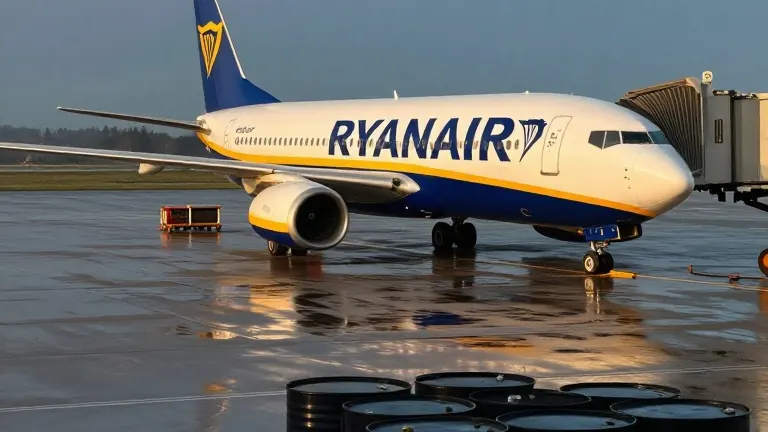
Ryanair expects its fuel costs to rise by roughly two billion euros (£1.7 billion) in the year ending March 2028. The Dublin-based carrier attributes the spike to jet fuel prices staying high well into 2027 due to conflict in the Middle East. To absorb the expense, management is reviewing labor agreements and considering temporary pay freezes.
The airline currently hedges about 80% of its jet fuel at prices lower than the current market rate. These protections expire at the end of the financial year. Once the hedge fades, Ryanair will face the full market price for the fuel it burns. The company stated that European short-haul airfares will rise to reflect these costs, though the price increases will not fully cover the difference.
Financial results for the six months through September showed a 15% drop in profit after tax, falling to 2.15 billion euros (£1.79 billion). Revenue climbed 3% to 10.08 billion euros (£8.41 billion), driven by a 6% increase in passengers. Operating costs, however, jumped 10% to 7.69 billion euros (£6.42 billion). Earlier this year, Ryanair reduced its annual passenger target from 216 million to 214 million to mitigate rising fuel expenses.
Chief Executive Michael O’Leary noted that demand in the third quarter remained strong, with fares trending slightly above last year’s levels. He warned that the booking window is shorter than usual, limiting visibility. O’Leary said the final fare outcome for the third quarter depends on bookings for October, November, and the Christmas period. He described the current situation as having zero visibility into the fourth quarter, making it too early to provide full-year profit guidance for 2027.
The airline is also evaluating increased use of artificial intelligence to boost productivity in operational and back-office functions. This review aims to offset labor costs, which may include lower crewing ratios. The strategy comes as the company navigates a period where rising input costs are squeezing margins despite higher passenger volumes.
Source: Bristol Post
More Business · Bad Business · Report a business · Got a Story?