218 seats: The number Democrats need to win control of the House
Polls currently show Democrats leading in enough House races to take control, but recent history suggests those predictions are often wrong.
By Kenji Hassan ·
Democratic candidates are currently ahead in more than 218 House of Representatives races, the number required to seize control of the lower chamber. Recent surveys also show them tied or slightly ahead in several key Senate contests. For the upcoming midterm election on November 3, these numbers suggest a strong showing for the party currently in opposition.
The path to these favorable polling numbers stems from a few key factors. President Donald Trump holds historically low approval ratings. American voters are expressing dissatisfaction with rising costs for food and utility bills. These conditions typically benefit the party not currently in power during midterm cycles.
Current data from major outlets supports the Democratic lead. A New York Times poll recently showed a tie in the South Carolina Senate race. That state saw Trump win by 18 percentage points in 2024. CNN surveys place Democrats ahead in Texas, Kansas, and Maine. However, voters and analysts remain cautious given the track record of recent elections.
Public opinion polls have frequently missed the mark in recent years. Trump outperformed predictions in both 2016 and 2024. In 2020, most surveys indicated a comfortable victory for Joe Biden, but the race ended in a narrow defeat for Trump. These errors were often small in percentage points, but they changed the outcome of close races.
This year’s primaries proved that surprises are still possible. In Michigan, polls predicted a double-digit win for Democrat Abdul El-Sayed. He won by only 1 percent. In Wisconsin, the Democratic candidate for governor had a polling lead near 20 points. That candidate lost by a fraction of a percent. These results highlight how quickly voter sentiment can shift in nominating contests.
Clifford Young, president of Ipsos Public Affairs, says reaching American voters has become harder. Many people have abandoned landline phones and screen their calls. Those who do answer are often less willing to participate in surveys. Young notes that conservatives, particularly those on the far right, often view polling as part of the establishment system they oppose.
"Conservatives, especially those on the far right, are much more anti-establishment by nature," Young says. "And they don't participate in anything. They hate the system. That's the challenge." If pollsters undercount Republican voters systematically, their data may skew toward Democrats. This is a major concern for prediction models.
Midterm polls have historically been more accurate than presidential polls in recent years. This is partly because Trump’s ability to draw disaffected voters to the polls was not a factor in 2022. In that cycle, Democrats avoided a total electoral wipeout despite low approval ratings for then-President Biden. They lost the House but kept the Senate.
Several factors work against Democrats this year. Many of the competitive districts are in states Trump won easily in 2024. Changes to House election boundaries mean fewer seats switch hands between parties. The electorate is more polarized, leaving fewer swing voters. Republicans also hold a cash advantage, with hundreds of millions of dollars available for attack ads in the final weeks.
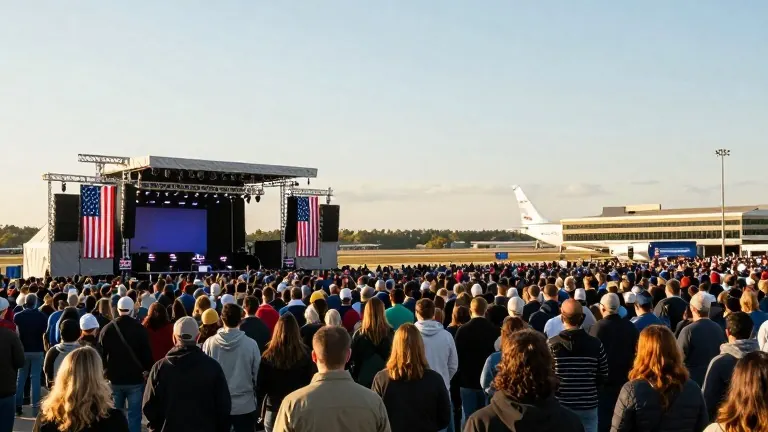
Polling averages generally provide a more accurate picture than individual surveys. Each poll carries a built-in margin of error based on sample size. In last year’s state and special elections, Democrats actually outperformed most surveys. Their voters turned out in unexpectedly large numbers. Trump is currently holding rallies in states he won comfortably in 2024, which has raised hopes among Democrats that Republican internal polling shows their candidates in trouble.
Uncertainty remains a constant in polling. Undecided voters still make up a key segment of the electorate in many races. They could break for either party in the final days. "I think we're doing a better job," Young says. "But part of the problem we always have is not just with the pollsters. Part of it is that we're dealing with humans. Humans are not easy."
Source: Casualty