Democrats seize full control of Congress as redistricting gambit fails
Voters rejected the administration's war and economic record, delivering Democrats a double majority and ending two years of Republican dominance in Washington.
By Priya Singh ·
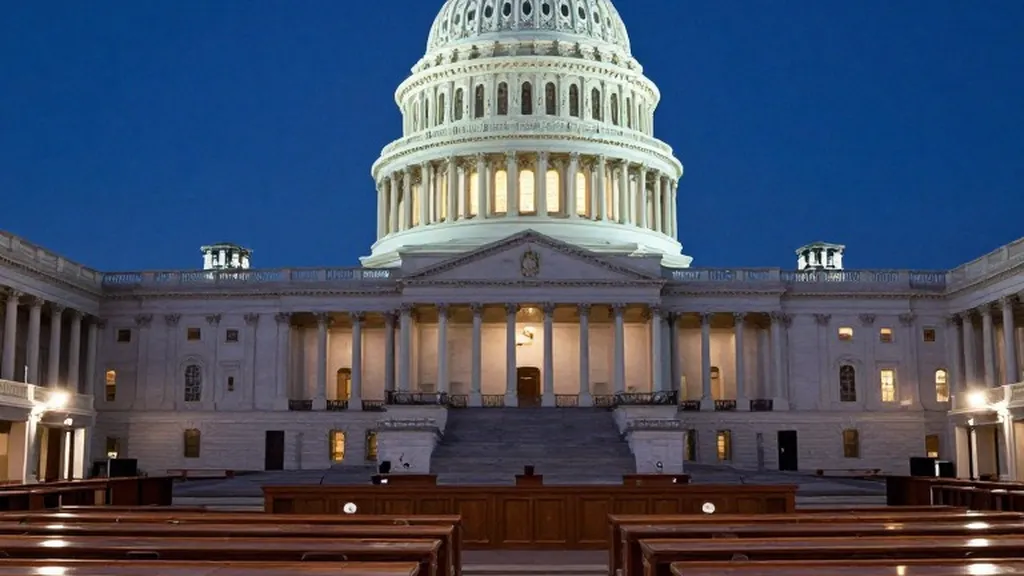
Voters delivered a decisive mandate for change on Tuesday, handing Democrats control of both chambers of Congress in a sweep that upended the political landscape. The results, confirmed by Ballotpedia and the Associated Press, show a fundamental reshaping of power in Washington that will define the next two years of governance. Democrats now hold a commanding majority in the House of Representatives, having won at least 227 of the 435 seats. This is a significant gain from the 215 seats they held before the election, according to the latest tallies from Ballotpedia. The margin of victory is wide enough to allow for internal disagreements while still enabling the passage of legislation, a level of control not seen in a decade.
In the Senate, the shift was equally dramatic and perhaps more surprising to national observers. Democrats secured at least 54 seats, flipping seven previously Republican-held seats in states that had long been considered reliable Republican territory. Ballotpedia data indicates that Democrats gained seats in Iowa, Kansas, Maine, North Carolina, Ohio, South Carolina, and Texas. These victories in traditionally red states, such as Texas and South Carolina, mark a historic break from the past. In Texas, Democrats had been shut out of every statewide race for more than three decades until Tuesday. In South Carolina and Kansas, the party has not elected a senator since 1932. This expansion of the map provides Democrats with the numbers to pass a legislative agenda and confirm judicial nominees.
The driver of this wave was a broad-based dissatisfaction with the administration's handling of the economy and the ongoing war with Iran. The AP Voter Poll, a survey of more than 100,000 voters, found that about six in 10 voters disapprove of how President Donald Trump is handling the presidency. This discontent translated directly into support for Democratic House candidates. Roughly half of voters cited the cost of living and government corruption as crucial issues in their decision to vote for Congress. The war in Iran was also a major factor, with about six in 10 voters saying the United States made the wrong decision in taking military action. For many households, the rise in fuel and grocery prices made the conflict feel like a daily financial burden rather than a distant geopolitical event.
Democrats capitalized on this anger by targeting specific policy areas that directly affect voters' daily lives. House Democratic Leader Hakeem Jeffries, who is expected to become the first Black speaker of the House, promised a 100-day agenda focused on lowering the costs of gas, groceries, and other goods. He also vowed to reverse cuts to the Affordable Care Act and Medicaid, addressing healthcare costs that many families find unmanageable. Jeffries framed the election as a response to voter demands for dramatic change, stating, "We hear you. We're going to work hard to deliver on the dramatic change that you deserve." This message resonated with voters who felt their concerns had been overlooked during the previous two years of unified Republican control.
The Republican attempt to use redistricting to maintain a House majority ultimately failed. At the urging of President Trump, Republicans in eight states redrew congressional district boundaries over the past year, hoping to gain an edge in the midterm election. The plan was to flip Democratic-held seats and retain Republican ones, particularly in states like Texas, Florida, and Alabama. However, the strategy collapsed under the weight of the Democratic surge. In Texas, Democrats not only held their seats but unseated Republican Rep. Monica De La Cruz in the Rio Grande Valley. In Florida, Democratic Rep. Jared Moskowitz won reelection despite a $26 million spending effort by Republicans to defeat him. Former Attorney General Eric Holder, chair of the National Democratic Redistricting Committee, said the Republican plan was systematically dismantled by voters who chose to elect a new Democratic majority.
Vice President JD Vance publicly distanced himself from President Trump’s defense of the Iran war after the election results became clear. In a lengthy social media post, Vance blamed the unpopular conflict for the Republican Party's defeat, suggesting that losing the Senate for the next six years was a significant price to pay. This marked a break from Trump, who continued to defend the war as necessary. The AP Voter Poll indicated that the war was not the single leading issue for all voters, but it was a crucial factor for a large portion of the electorate. Nearly all voters who backed Democratic House candidates said the war was the wrong decision, while roughly eight in 10 who backed Republicans said it was the right one. This divide highlighted the internal tension within the Republican base over the administration's foreign policy priorities.
The election results also set the stage for a robust oversight agenda in the new Congress. With Democrats in control of both chambers, the new majority is poised to reassert itself as a coequal branch of government. Rep. Robert Garcia, the top Democrat on the House Oversight Committee, issued a one-sentence warning to the administration: "Lawyer up." Sen. Ron Wyden, the top Democrat on the Senate Finance Committee, signaled a similar intent with his own one-word missive: "Subpoenas." These comments suggest that Democrats are prepared to investigate the administration's actions, including the handling of the Iran war and economic policy. Impeachment of the president or Cabinet members is also being considered as an option, according to House Democrats.