25 Years On: The $399 Gadget That Put Your Whole Music Library in Your Pocket
Apple’s original iPod turned a small hard drive into a cultural phenomenon, offering 1,000 songs in a device smaller than a deck of cards.
By Priya Singh ·
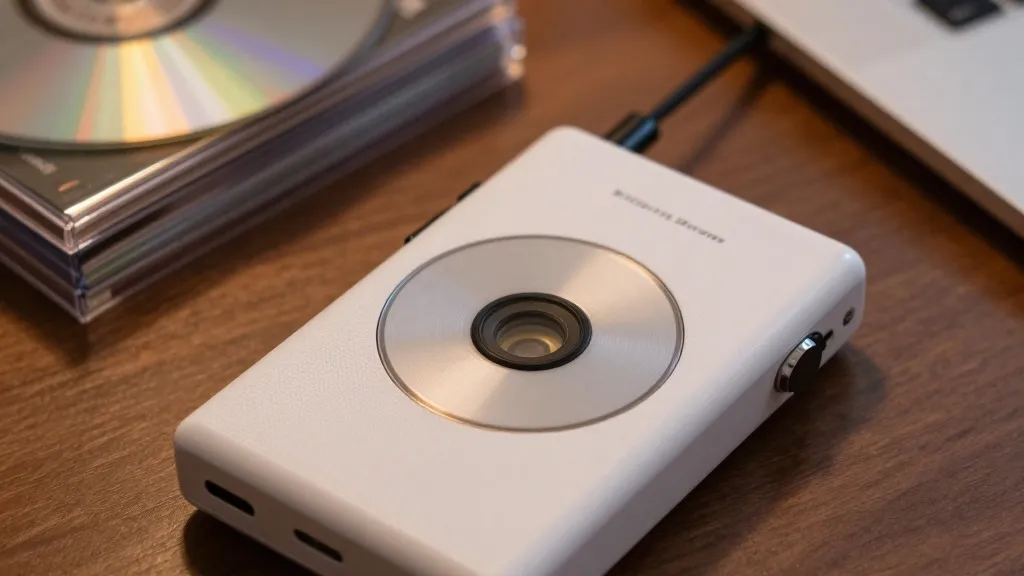
Twenty-five years ago this week, the landscape of personal entertainment was fundamentally altered by a small white device that promised to change how people carried their favorite tunes. On October 23, 2001, Apple CEO Steve Jobs took the stage to unveil the original iPod, a product that would define the pre-smartphone era of portable media.
The launch came at a pivotal moment for the Cupertino-based company. Having successfully steered Apple away from its earlier beige hardware into the Mac OS X era with successful products like iMacs and iBooks, the company was riding a wave of renewed consumer confidence in the aftermath of the dot-com bubble burst. Jobs envisioned the Mac as the central hub of a digital lifestyle, connecting cameras, camcorders, and now, a portable music player. He believed that because music was a universal passion with no dominant market leader, it was the perfect entry point for Apple.
At the time, the portable music market was fragmented. Companies like Sony and smaller firms such as Creative and Sonic Blue had already released digital players, but Jobs argued that none had yet found the right recipe for success. The market offered four main options: CD players, MP3 CD players, flash-based players, and hard disk-based units. Apple chose the hard disk approach, betting that it offered the optimal balance of capacity and cost for the average consumer.
The device itself was a marvel of engineering for its day. Priced at $399, it featured 5GB of storage, which Jobs highlighted as enough to hold 1,000 songs. Specifically, this meant 1,000 typical pop songs encoded as MP3s at 160Kbps. The compact size was made possible by a newly released 1.8-inch hard drive from Toshiba, which was just 0.2 inches thick. The finished product measured 2.4 by 4 by 0.78 inches and weighed only 6.5 ounces, making it lighter than most cell phones of that era and roughly the size of a standard deck of playing cards.
Beyond raw storage, the iPod introduced features that set it apart from competitors. It supported CD-quality sound and common audio formats like MP3, WAV, and AIFF. A key differentiator was its connectivity; it was the first music player to use a single FireWire 400 cable for both data transfer and charging. Jobs claimed this speed allowed a full CD of music to transfer in just five to ten seconds, a stark contrast to the five minutes required by USB connections of the time. Filling the entire device with 1,000 songs took approximately 10 minutes, compared to five hours on a USB-based player.
The user experience was central to the device’s appeal. Jobs emphasized the minimalist design and the ease of use, noting the single-handed controls and a scroll wheel with tactile feedback provided by a piezoelectric clicker. This allowed users to quickly navigate playlists, artists, or specific tracks. During the on-stage demonstration, the first song played was 'Building a Mystery' by Sarah MacLachlan. The device also included a rechargeable lithium-polymer battery capable of 10 hours of continuous playback, with an 80% charge achievable in one hour.
The launch was paired with the release of iTunes 2, which introduced features like MP3 CD burning and, crucially, Auto-Sync. This feature ensured that any library curated on a Mac would automatically stay in sync with the iPod whenever the device was connected. The iPod also functioned as a FireWire hard disk drive, adding further utility to the device.
The original iPod’s success paved the way for over a decade of innovation in the product line, which eventually coexisted with the iPhone after its launch in 2007. Although the iPod’s prominence waned as smartphones absorbed its functions, the product line remained in production until the 7th-generation iPod Touch in May 2019. The line was officially discontinued in May 2022, but its initial impact on the market remains a defining moment in the history of personal technology.
Source: Tom's Hardware · original report published