NASA Revises Lunar Landing Timeline
Space agency adjusts docking protocols for Starship and Blue Moon to target a 2028 surface return.
By Leila Santos ·
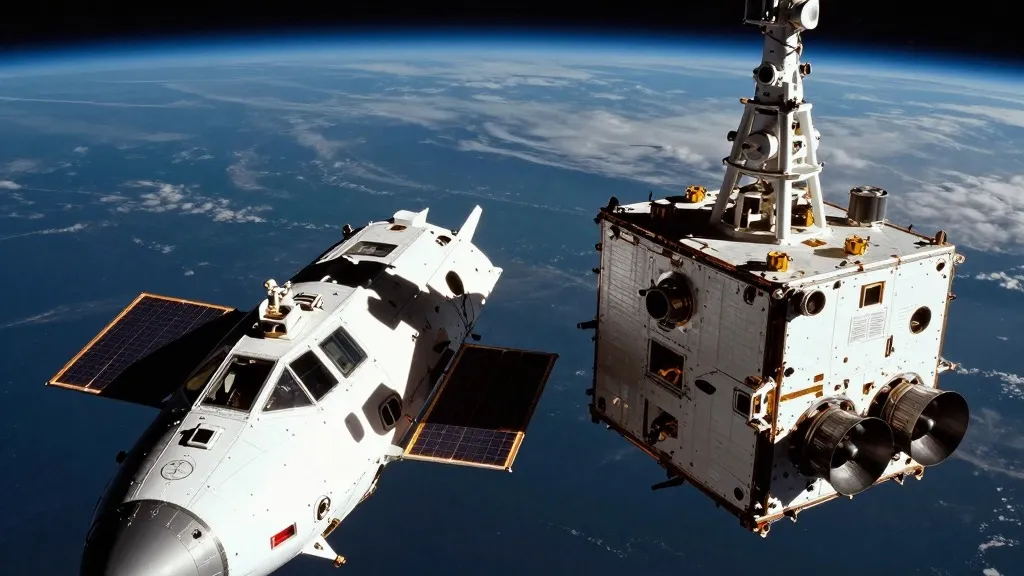
NASA has officially revised its architectural roadmap for returning humans to the lunar surface, a move that fundamentally alters how commercial partners will interface with the agency's Orion spacecraft. The updated plan, detailed during a comprehensive briefing held this past Friday, shifts critical docking operations from the vicinity of the Moon to high-Earth orbit for SpaceX’s Starship vehicle. This change represents a significant departure from previous configurations and serves as the central pillar of a strategy aimed at accelerating the Artemis program’s timeline.
The agency is now targeting a launch window for Artemis IV as early as 2028, which would mark the first crewed landing on the Moon since the Apollo era. To support this aggressive schedule, NASA officials confirmed that the demonstration mission, Artemis III, remains on track for a summer 2027 launch. This precursor mission will involve docking tests with both the Starship and Blue Moon landers in the vicinity of Earth. While these dates have been discussed in prior reports, this briefing marked the first instance where NASA formally acknowledged the specific architectural changes required to make these targets viable.
The financial and logistical implications of these shifts are substantial, particularly regarding the complexity of in-space refueling. For Blue Origin, the revised architecture mandates four separate launches of the New Glenn rocket. Notably, this configuration eliminates the requirement for spacecraft-to-spacecraft refueling maneuvers, a step that has historically posed significant technical challenges. Furthermore, the Blue Origin pathway includes a provision for the Blue Moon lander to rendezvous with Orion in low-Lunar orbit, offering a flexible alternative to the more complex deep-space docking scenarios previously contemplated.
In contrast, the SpaceX plan hinges on the ability of Starship to dock with Orion while in high-Earth orbit before the combined vehicle transits to the Moon. This approach was largely driven by engineer requests during early 2026 meetings, where SpaceX sought to remove the requirement for docking in a near-rectilinear halo orbit. That specific orbital path was energy-intensive and presented additional engineering difficulties. The cancellation of the Lunar Gateway earlier this year effectively solved this problem for SpaceX by removing the need to interface with a permanent orbital station, thereby simplifying the trajectory and reducing the energy budget required for the transfer.
NASA Administrator Jared Isaacman expressed confidence in the revised strategy during the presentation. "This is an achievable path we are on right now," Isaacman stated. "We have the mandate, we have the resources, and the support from our stakeholders to be able to execute, and that’s what we intend to do." His comments suggest an institutional commitment to holding the 2028 date, despite the inherent risks associated with relying on two distinct commercial lander systems.
The involvement of two primary commercial partners introduces a layer of complexity that the agency must carefully manage. Both SpaceX and Blue Origin are now integral to the success of the Artemis program, with their respective vehicles serving as the primary means of lunar descent. The decision to allow both systems to proceed under slightly different architectural constraints reflects a pragmatic approach to risk management. By not relying on a single vendor, NASA hedges against potential delays, but it also doubles the integration challenges it must oversee in the coming years.
Skeptics may question whether the agency can truly hold to these dates, given the historical tendency for space programs to slip. The shift to high-Earth orbit docking for Starship is a logical step to reduce energy requirements, but it raises questions about the stability of the docking mechanism in that specific orbital environment. Similarly, the Blue Origin plan’s reliance on four New Glenn launches requires a high degree of operational cadence and reliability from the rocket system. Any disruption in the launch schedule could have cascading effects on the overall mission timeline.
The stakes for this revised plan are high, as it sets the precedent for how future deep-space missions will be conducted. If the 2028 target is met, it will validate the new approach to commercial lunar landers and potentially open the door for more frequent crewed missions. However, if the dates slip, it could undermine confidence in the commercial partnership model that underpins the Artemis program. For now, the agency is proceeding with a clear, albeit challenging, path forward, relying on the capabilities of its partners to deliver on a tight schedule.
As the next few years unfold, the focus will shift from planning to execution. The summer 2027 launch of Artemis III will be the first true test of the new architecture. Success in that demonstration mission will be critical to maintaining momentum toward the 2028 surface landing. The agency has laid out its intentions clearly, but the coming months will determine whether these plans translate into reality or remain just another set of ambitious but elusive goals on the roadmap for lunar exploration.
Source: Ars Technica · original report published