SpaceX Rebuffs US Space Force as PLD Space Finalizes Miura 5
The commercial launch landscape shifted this week as SpaceX declined three military contracts while a Spanish firm reported significant progress on its inaugural small-lift vehicle.
By Priya Singh ·
The commercial launch sector saw a notable pivot on Thursday as SpaceX officially declined three launch contracts offered by the United States Space Force. This decision signals a strategic preference for other opportunities over immediate military payloads, adding another layer of complexity to the competitive dynamics in the heavy-lift market. Simultaneously, on the civil side, a NASA safety panel indicated that SpaceX’s Starship vehicle might require up to 22 propellant refuelings to successfully support a lunar landing, highlighting the engineering challenges that remain in deep-space logistics.
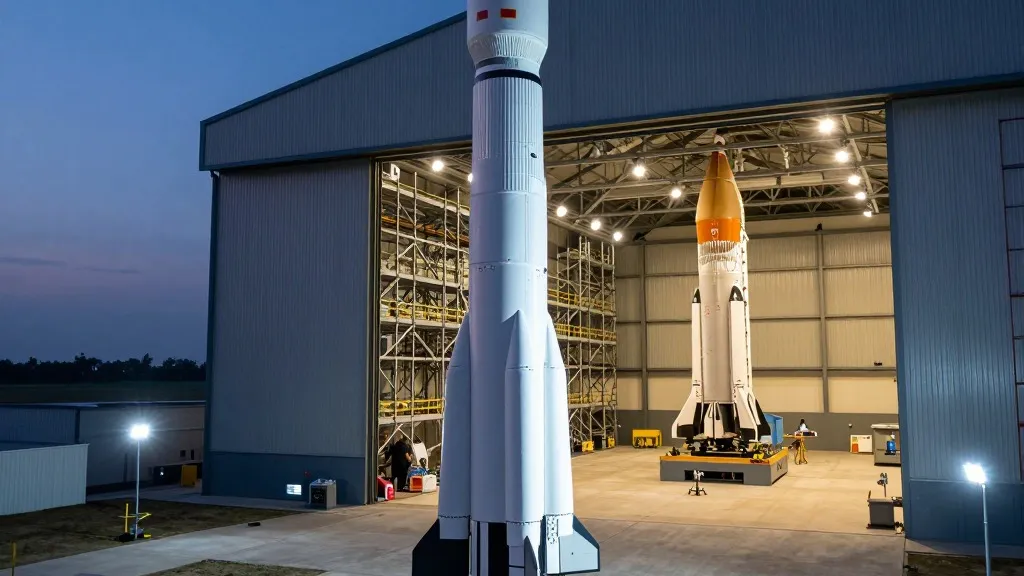
While these developments dominate the headlines, significant progress is being made by smaller players in the industry. In Spain, PLD Space has confirmed that its Miura 5 rocket is nearing final integration, with a target for its inaugural flight set before mid-2027. The company has already manufactured three units of this small-lift vehicle. According to CEO Raúl Torres, the additional two rockets were designed specifically to qualify key system elements, allowing the engineering teams to apply lessons learned directly to the primary launch vehicle. This approach aims to mitigate risk in the upcoming test campaign.
The technical details of the Miura 5’s preparation indicate a rigorous qualification process currently underway at PLD’s facility in Teruel. One second stage has been fully integrated to begin system-level testing under conditions that mimic actual operation. This stage is undergoing a wet dress rehearsal and a static hot-fire test, which are critical steps to ensure the reliability of the propulsion and structural components. Torres noted that manufacturing all three vehicles allowed the team to work continuously across different production stages, ensuring that the final launch-ready unit benefits from the iterative improvements made during the qualification campaigns.
In Canada, the startup environment is also heating up with Reaction Dynamics seeking to raise $350 million in new funding. This capital injection is intended to expand the company’s workforce from its current 68 employees to more than 350, supporting the development of its Aurora small-lift rocket. Reaction Dynamics aims to have Aurora reach orbit by 2028. The company also revealed plans for a medium-lift rocket named Borealis, with a debut targeted for 2031. This expansion reflects the growing confidence in the Canadian launch ecosystem, which now includes three prominent startups competing for a share of the global market.
The stakes for these companies are high as they navigate a landscape defined by SpaceX’s dominant position and increasing technical demands. For SpaceX, the rejection of the Space Force contracts may reflect a focus on maximizing revenue from commercial customers or aligning with specific long-term government programs. For PLD Space and Reaction Dynamics, the next two years are critical proof-of-concept periods. Success in achieving their respective orbital milestones will determine their viability in a market where funding and technical execution are tightly coupled. As the industry moves toward more frequent launches, the ability to deliver reliable, cost-effective solutions will be the deciding factor for both established giants and emerging challengers.
Source: Ars Technica · original report published