Federal Lighting Standards: Cyan Lamps Proposed for Driverless Vehicles
NHTSA suggests a uniform blue-green light to identify active automated driving systems, while modernizing outdated vehicle regulations.
By Kenji Hassan ·
For drivers and pedestrians in the Mid-Atlantic, the visual landscape of the road may soon include a distinct blue-green glow. This change stems from a new federal proposal that seeks to standardize how autonomous vehicles communicate their operating status to the public. The goal is to provide a clear, consistent signal that no human is currently at the wheel, reducing ambiguity in mixed-traffic environments.
The National Highway Traffic Safety Administration (NHTSA) has released proposed revisions to Federal Motor Vehicle Safety Standard (FMVSS) No. 108. These changes specifically target the lighting requirements for vehicles equipped with automated driving systems. The agency aims to replace the current patchwork of manufacturer-specific signals with a unified federal standard.
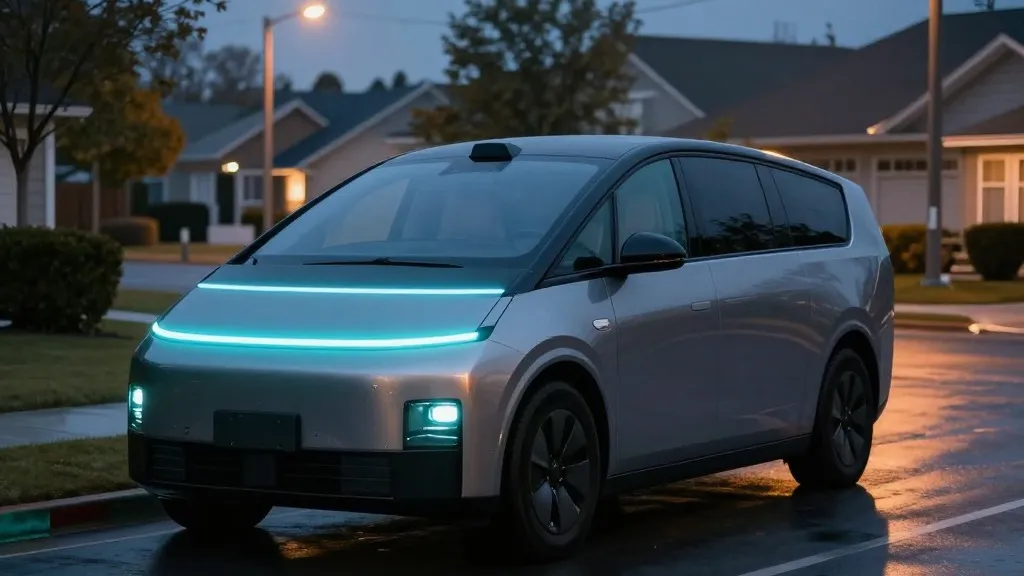
Under the proposal, manufacturers would be permitted to install cyan-colored marker lamps. These lights are designed to clearly indicate that an automated driving system is in control of the vehicle. NHTSA selected this specific hue because the automotive industry already reserves red, amber, white, and flashing blue or red lights for standard functions such as brakes, turn signals, headlights, and emergency vehicles. Cyan fills a visual gap, offering a color that is distinct from existing traffic signals and less likely to confuse other road users or law enforcement.
The agency noted that while the use of cyan is optional for manufacturers, the federal standards would dictate the specific color, brightness, and placement of the lamps. This approach ensures that if a company chooses to implement the feature, it does so in a consistent and legally compliant manner. This prevents a fragmented market where different robotaxi operators use varying colors or intensities to signal the same status.
There is some precedent for this type of lighting. Mercedes-Benz previously received state-level approval to use turquoise lights on its Level 3 Drive Pilot vehicles. Although the automaker has since moved toward a Level 2++ system, the initial approval demonstrated the feasibility of using non-standard colors to denote autonomous operation. NHTSA intends to create a national benchmark that operators like Waymo, Nuro, and Zoox, as well as automakers like GM and Mercedes, can adopt uniformly.
The proposed rule also streamlines existing regulations by removing lighting requirements that are unnecessary for vehicles without human drivers. Current rules mandate the presence of physical hazard switches, manual beam shifters, and turn levers. NHTSA proposes to eliminate these requirements, acknowledging that they are redundant in fully autonomous designs. Additionally, the agency plans to update the 12.8-volt testing standard to accommodate modern LED architectures, reducing administrative hurdles for manufacturers.
This regulatory update is part of a broader Department of Transportation initiative to facilitate the deployment of autonomous vehicles. The administration is working to simplify the process for building cars that lack traditional human-control interfaces, such as steering wheels and pedals. By clarifying the rules, the government hopes to accelerate the integration of driverless technology into mainstream transportation networks.
Despite the push for streamlined regulations, enforcement remains active. Last month, NHTSA initiated an audit inquiry into the Tesla Cybercab. The investigation seeks to examine the technical data and processes Tesla relied upon when certifying the vehicle. The focus of the audit includes the absence of certain design features, such as sideview mirrors, pedals, and a steering wheel, which are currently required under FMVSS. This case highlights the ongoing tension between regulatory modernization and the strict application of existing safety standards.
Source: The Verge · original report published