55.7% of Israeli voters cast ballots by afternoon in record turnout
The Central Elections Committee reports the highest participation rate since tracking began, as Israelis decide the fate of Prime Minister Benjamin Netanyahu's government.
By Leila Santos ·
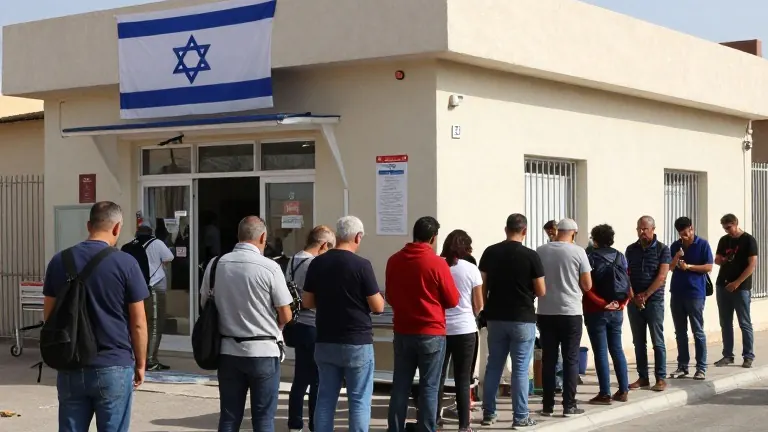
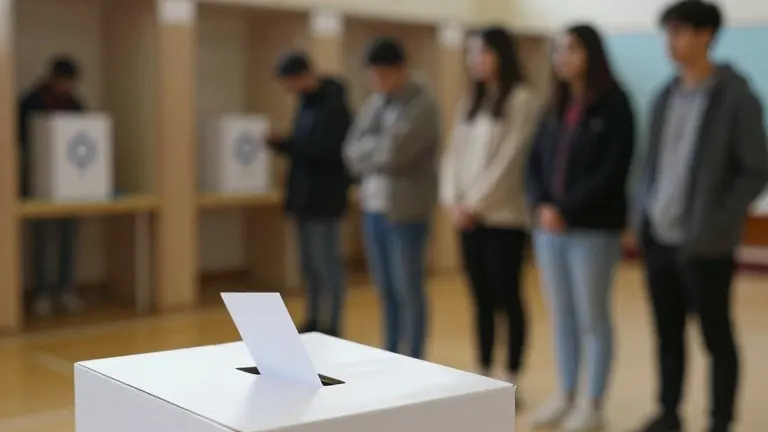
By 4 p.m. Tuesday, 55.7% of Israel's 7 million eligible voters had cast their ballots. The Central Elections Committee identified this as the highest turnout recorded since it began tracking participation data.
This marks the first parliamentary election since the Hamas attack on October 7, 2023. Prime Minister Benjamin Netanyahu framed the vote on Sunday as a fight for Israel's existence. However, political analysts told the Jewish Telegraphic Agency that domestic issues are the primary driver. Udi Sommer, a professor of political science at Tel Aviv University, described the vote as a referendum on Israeli democracy and Netanyahu's accountability for the events of that day.
The election determines the composition of the 26th Knesset. Netanyahu’s bloc, composed of far-right and ultra-Orthodox parties, faces an opposition group led by former army chief Gadi Eisenkot. Tani Frank, director of the Shalom Hartman Institute’s Center for Judaism and State Policy, noted that the election is consequential for both sides. He said Netanyahu views the current administration as a final window to secure strategic gains in Iran and expand the Abraham Accords. Frank said the opposition views the vote as an urgent effort to protect democracy and integrate the growing Haredi community.
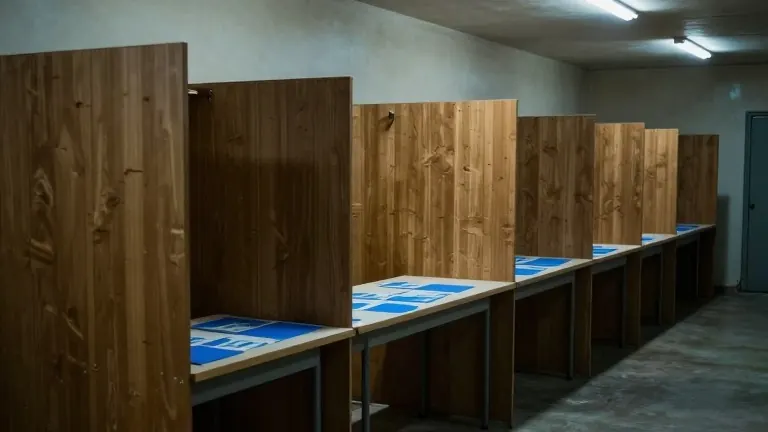
Voting is conducted in person at assigned polling stations. Approximately 7.3 million Israelis are eligible to vote. Tens of thousands of Israeli nationals living abroad returned to cast ballots, placing paper slips into blue envelopes. Election Day is a national holiday, closing most workplaces and schools while shops remain open, some with sales.
The election committee set up 12,018 polling stations with roughly 18,000 ballot boxes and 450 million ballot papers. Thousands of volunteers staffed the stations, and police deployed 20,000 officers nationwide. Police said in a statement that these measures ensure voters can reach stations safely. The committee also used approximately 15,000 cameras to detect irregularities, while cyber units worked to prevent online disinformation.
Public opinion polls published Friday show that neither bloc is projected to secure the 61 seats needed for a majority in the 120-member Knesset. Netanyahu’s bloc is projected to win around 50 seats. Eisenkot’s Yashar party and its partners are positioned better but remain short of a majority. The two Arab-majority groupings, the Joint List and Ra’am, are projected to win 14 or 15 seats combined. Neither Arab grouping is expected to join a Netanyahu-led government, though they may support an opposition-led minority government.
Three other parties are near the 3.25% electoral threshold: Amcha Yisrael, the Reservists, and the Haredi Public Party. Crossing this threshold could alter seat distribution. Frank said the most likely scenario is that neither bloc wins a clear majority. He noted that Netanyahu may aim to remain prime minister during additional election rounds, as occurred in 2019 and 2020. The opposition would need to increase its numbers to replace the government without relying on Arab parties for a stable coalition.
Source: The Jewish Exponent