Early vote surge tests Republican money advantage as parties bet on turnout
With 57 million ballots cast early, Democratic and Republican leaders focus on voter mobilization to determine control of Congress.
By Kenji Hassan ·
The United States is in the midst of a midterm election that will determine which party controls Congress for the final two years of President Donald Trump's second term. All 435 seats in the House of Representatives are up for grabs, along with 35 Senate seats and 36 governorships. The Associated Press notes that voters are struggling with high prices and are angry over an unpopular war with Iran. This context frames the day's activity as a direct referendum on the administration's performance.
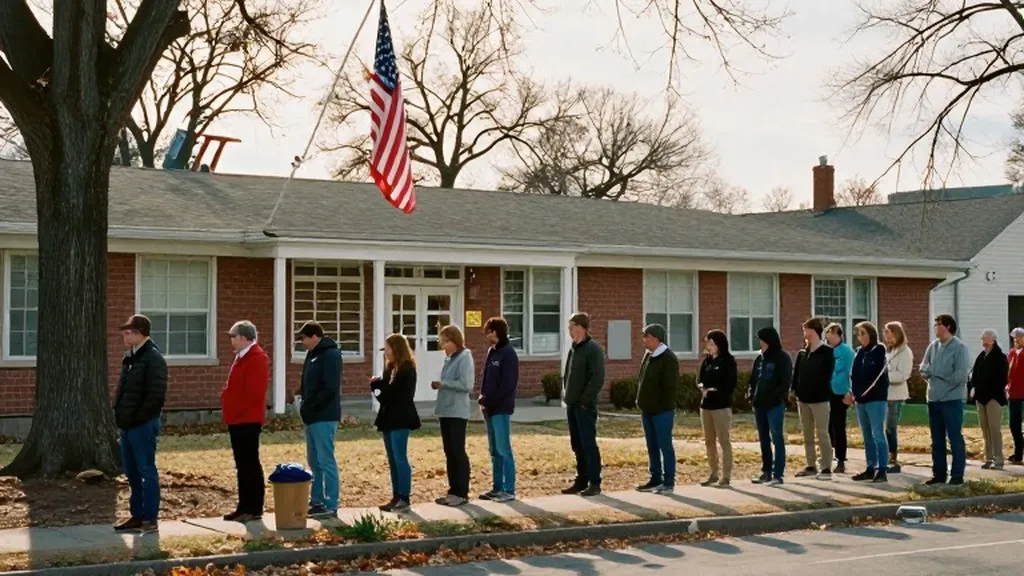
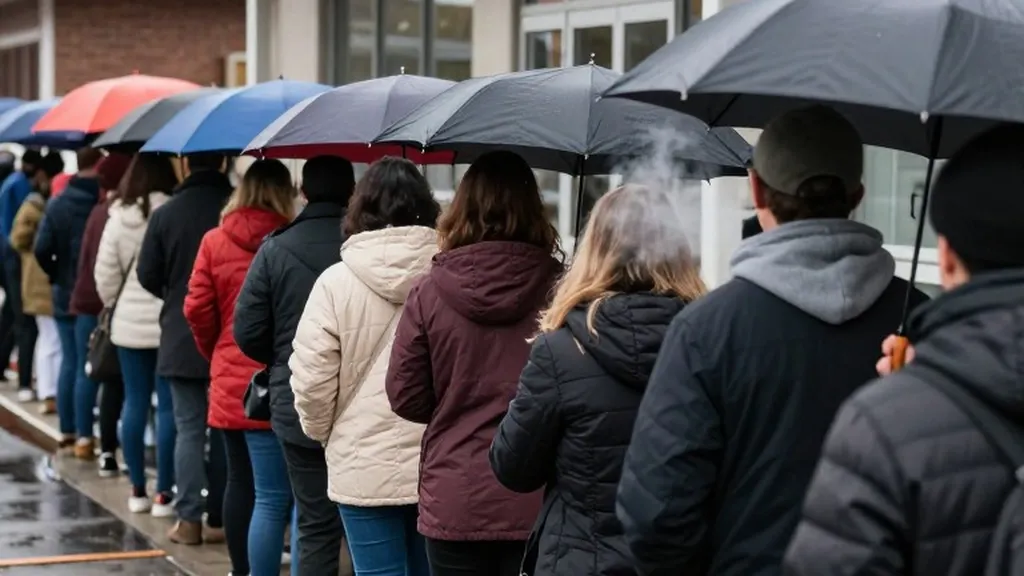
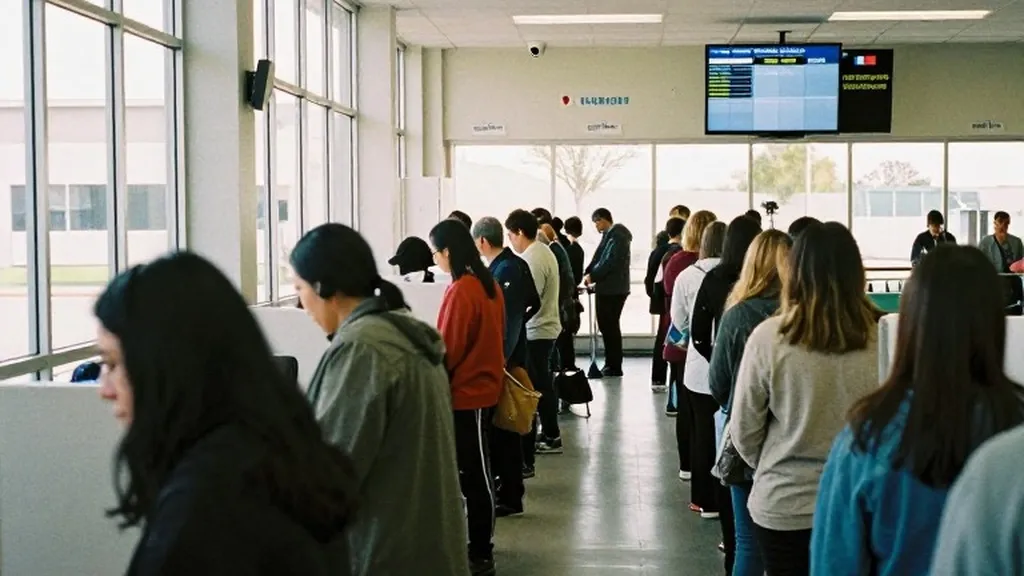
Turnout has been a central focus for both parties in the lead up to Tuesday. More than 57 million people had already voted as of Monday, surpassing the early vote totals from four years ago in many closely watched states. This high level of early participation has forced both campaigns to shift their strategies toward ensuring their supporters reach the polls or mail their ballots on time. The ground game has become as critical as the television advertising that has dominated the fall.
Democratic leaders are expressing cautious optimism about the numbers. Rep. Suzan DelBene, the chair of the Democratic Congressional Campaign Committee, stated that the American people are angry and want change. She suggested that the high early vote reflects a desire for a shift in power in Washington. Democrats need a net gain of three districts in the House to take the majority, and they need a net gain of four Senate seats to control that chamber. They are currently holding 214 House seats and 45 Senate seats, counting two independents who caucus with them.
Republican leaders are bracing for the possibility of losing the House while fighting to hold the Senate. Joe Gruters, the chair of the Republican National Committee, emphasized that everything depends on turnout. He said that if the party turns out its voters, they will win, and that this has been the focus of their planning. Republicans can afford to lose only two House seats and two Senate seats to keep their majorities. They currently hold 218 House seats and 53 Senate seats.
The financial disparity between the two parties has been a significant obstacle for Democrats. The 2026 elections are likely to be the most expensive in history. Republican committees have outraised and outspent Democratic committees, helped by Trump-affiliated groups and Elon Musk. However, at the candidate level, Democrats have outraised their opponents. According to an AP analysis of AdImpact data, 88.1 percent of Republican general election TV ad spending went to states and districts that Trump won in 2024. This includes more than 850 million dollars spent in areas where he won by ten points or more.
The ground game has involved extensive organizing efforts in battleground districts. In the House, 46 districts are considered battlegrounds, with 25 held by Democrats and 21 by Republicans. In the Senate, 13 races are considered competitive. The AP notes that economic strain and tariffs have made states like Maine competitive. In Maine, Senate Majority Leader Susan Collins is facing a challenge from Troy Jackson. In Michigan, the open Senate seat is seen as a key target for Democrats. Gary Peters is retiring, and the state voted for Trump by only 1.4 points in the 2024 presidential election.
Voters on the ground are citing specific financial concerns as they make their decisions. James Moore, a 57 year old librarian in Raleigh, North Carolina, said he is paying more taxes and more for healthcare. He expressed frustration with the cost of living, which he sees as a primary driver of his vote. In contrast, Mark Barker of Palm Beach Gardens, Florida, said he has been following Trump closely and believes he is doing an awesome job. These individual stories reflect the broader national mood described by AP-NORC polling, which shows that about seven in ten adults say the country is heading in the wrong direction.
The administration has been actively involved in the election process, with Trump holding dozens of rallies in the final days. He ended his schedule on Sunday in Salina, Kansas, where he told voters to pretend he was on the ballot. His schedule included stops in Mississippi, South Carolina, and Texas. Many Republican candidates have kept their distance from the president, reflecting the complex dynamics of this midterm cycle. The administration has also filed lawsuits in Alaska and California related to voting procedures, which Democrats fear could lead to interference.
New congressional maps in six states are adding another layer of complexity to the race. California, Florida, Missouri, North Carolina, Tennessee, and Texas are using new maps after mid-decade redistricting. Ohio is also using a new map. These changes were intended to help Republicans, but the AP notes that new districts may not vote as drawn. The redistricting efforts were part of a strategy to beat the typical midterm pattern where a president's party loses seats. However, the effectiveness of these new maps remains to be seen on Election Day.
Election officials are working to ensure that every ballot is counted accurately and on time. The U.S. Postal Service added hours, staff, and special lines to help ensure mail ballots are processed in a timely manner. A federal judge temporarily barred the administration from carrying out a plan to prevent noncitizen voting, citing concerns about disenfranchising eligible voters. In California, a judge ordered the administration to stop demanding that officials segregate ballots from suspected noncitizens. These legal developments have raised concerns about the administration of the vote in several key states.
The stakes of this election extend beyond simple party control. If Democrats win even one chamber, investigations and possible impeachment proceedings become likely. House Democratic Leader Hakeem Jeffries has outlined a 100-day agenda focused on the cost of living and oversight of the administration. A strong Democratic night would also boost potential 2028 candidates such as Gavin Newsom, JB Pritzker, and Pete Buttigieg. The results will be closely watched by Wall Street, with Reuters noting that the outcome could impact investor concerns about AI spending and debt ceiling negotiations.