New Maps in Seven States May Defy Redistricting Goals
Democrats face a tough road to a House majority as voters in newly drawn districts in California, Florida, and other states decide whether to follow the lines or their past voting habits.
By Leila Santos ·
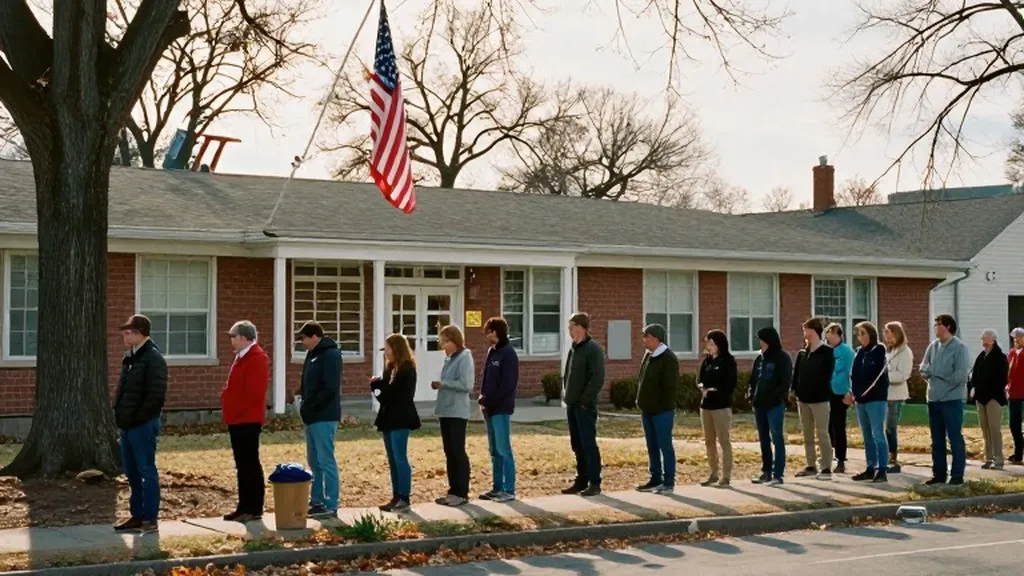
On Tuesday, November 3, 2026, voters are heading to the polls to decide which party controls Congress for the final two years of President Donald Trump's second term. The stakes are high for both parties, with the outcome determining the balance of power in the U.S. House and Senate. According to the Associated Press, the election is being viewed as a referendum on the president's performance, with many voters expressing frustration over high prices and an unpopular war with Iran. The Associated Press noted that 35% of U.S. adults approve of Trump's job performance, while about seven in ten say the country is heading in the wrong direction. This mood has shaped the campaign, with Democrats focusing on the cost of living and Republicans emphasizing their ability to deliver on promises.
A critical element of this year's election is the use of new congressional maps in seven states. Following mid-decade redistricting, California, Florida, Missouri, North Carolina, Tennessee, Texas, and Ohio are using new district lines. The Associated Press reported that Republicans tried to beat the typical midterm pattern, where a president's party almost always loses seats, by drawing these new maps. However, there is growing uncertainty about whether these new districts will vote as the lines suggest. The maps were designed with specific goals in mind, but historical voting patterns in these areas may complicate the intended outcomes. This adds a layer of complexity to an already tight race for control of the House.
In the U.S. House, all 435 seats are up for grabs. Republicans currently hold 218 seats, while Democrats hold 214, with one independent and some vacancies. Democrats need a net gain of three districts to achieve a majority, whereas Republicans can lose no more than two seats. Ballotpedia counts 46 battleground districts, with 25 held by Democrats and 21 by Republicans. Notably, 21 Democratic-held districts voted for Trump in 2024, and nine Republican-held districts voted for Kamala Harris. These numbers highlight the competitive nature of the race and the importance of each swing district. The new maps in the seven states mentioned above are particularly significant because they may shift the balance in these close races.
Money is playing a major role in this election, which is likely to be the most expensive in history. Republican committees outraised and outspent Democratic committees, helped by Trump-affiliated groups and Elon Musk. However, at the candidate level, Democrats outraised their opponents. An analysis by the Associated Press of AdImpact data shows that 88.1% of Republican general election TV ad spending went to states and districts Trump won in 2024. This includes more than $850 million spent in areas where he won by 10 points or more. This spending strategy reflects the Republican focus on defending their strongholds, but it also raises questions about whether they are ignoring competitive districts where the new maps could have a significant impact. Democrats, on the other hand, are focusing their resources on flipping key seats to gain a majority.
The Senate race is equally intense, with 35 of 100 seats up for election. Republicans hold 53 seats, Democrats 45, plus two independents who caucus with Democrats. Democrats need a net gain of four seats to take control, while Republicans can lose only two. Ballotpedia identifies 13 Senate races as battlegrounds, including key matchups in North Carolina, Georgia, Ohio, Michigan, Texas, Maine, and New Hampshire. In North Carolina, Democratic former Governor Roy Cooper is facing former Republican National Committee chair Michael Whatley. In Georgia, Senator Jon Ossoff is running against Republican Representative Mike Collins. The Associated Press notes that economic strain and tariffs have made states like Maine competitive, with Senator Susan Collins facing Democratic former state Senate President Troy Jackson. These races are crucial for determining which party will control the Senate.
Governorships are also a major focus, with 36 races on the ballot. Republicans hold 26 governor's offices, while Democrats hold 24. Of the offices on the ballot, each party holds 18. Democrats would need a net gain of two governorships to achieve a nationwide majority, which Republicans have held since 2010. The Associated Press identifies several competitive governor races, including those in Texas, Florida, and Iowa. In Ohio, Republican Vivek Ramaswamy is facing Democrat Amy Acton. Ramaswamy's campaign faced backlash over an ad featuring Acton's estranged mother. In Georgia, Republican health care executive Rick Jackson is running against Democratic former Atlanta Mayor Keisha Lance Bottoms. These races are important for shaping state policies and influencing the broader political landscape.
Voters are also grappling with issues of election administration. A federal judge temporarily barred the Trump administration from carrying out a plan to prevent noncitizen voting, a move critics say risks disenfranchising eligible voters. Another judge ordered the administration to stop demanding that California election officials segregate ballots cast by people on its lists of suspected noncitizens. The U.S. Postal Service has added hours, staff, and special lines to ensure mail ballots are counted on time. These administrative challenges add to the uncertainty of the election, with both parties concerned about potential interference. Democrats fear that the Justice Department's threats to prosecute local election officials could lead to intimidation, while Republicans argue that these measures are necessary to ensure fair elections.