Graham's debate stumble reshapes South Carolina Senate fight
A new poll shows the race is now too close to call after the appointed candidate struggled to answer questions on foreign policy.
By Priya Singh ·
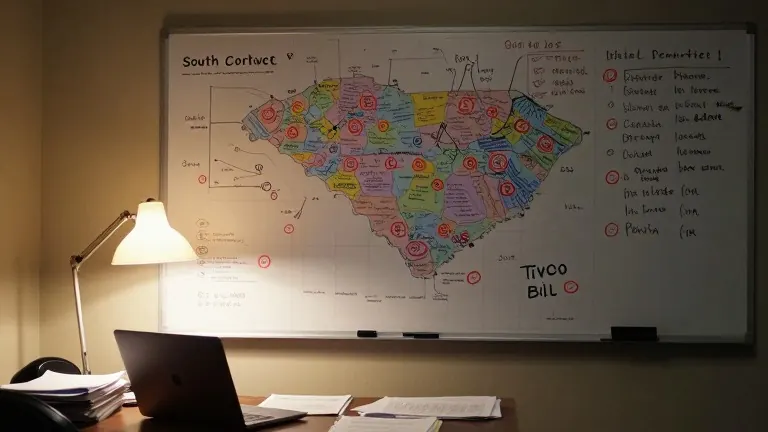
The South Carolina Senate race, once viewed as a safe Republican hold, has transformed into a genuine coin toss. A recent survey by The New York Times and Siena College found the contest statistically tied, erasing the comfortable margin that polls suggested just months ago. This shift follows a turbulent period defined by the sudden death of incumbent Lindsey Graham and the appointment of his sister to fill the vacancy.
Darline Graham’s path to the ballot has been rapid and unconventional. Governor Henry McMaster appointed her in July to complete her brother’s term after the family lost their parents when the siblings were young. Although she had no prior political experience, she won a crowded primary one month later. Now seeking a full six year term, her campaign faces scrutiny over whether she possesses the policy depth required for the upper chamber.
The core of the current tension lies in President Donald Trump’s heavy involvement. He has visited the state twice to campaign for his ally, a move that has energized his base but alienated others. Independent voters and supporters of Representative Ralph Norman have voiced frustration over what they see as a federal takeover of a local decision. Norman specifically criticized the President for inserting himself into the state’s internal politics.
Graham’s lack of experience became a visible vulnerability during the primary debate. When questioned about national security interests in the South China Sea and Taiwan, she admitted that the topic was not her specialty. National Republican organizations responded by injecting additional financial resources into the race, aiming to shore up her standing despite the gaffe. Party insiders remain confident they will hold the seat, citing historical trends.
On the other side, Democrat Annie Andrews has been campaigning for over a year. She won her primary before Lindsey Graham’s death, giving her a longer runway to build a coalition. Her campaign has received high profile support from figures like Senator Mark Kelly and former Secretary Pete Buttigieg. Andrews is positioning herself as an outsider to Washington, arguing that the Graham family represents an establishment that often overlooks local economic needs.
The two candidates met for their sole general election debate last month. Their exchange focused on the economy, the war with Iran, and artificial intelligence. Much of the discussion revolved around their respective qualifications. Andrews, who previously challenged Representative Nancy Mace, has never held elected office. Graham defended her candidacy by noting she kept her maiden name to honor her parents, a point that resonated with some voters as a personal rather than political decision.
Context matters when interpreting the current numbers. In 2020, polls also predicted a tight race, yet Lindsey Graham won by ten points in the state’s most expensive election at the time. Republicans have held both Senate seats since 1998. The state only has one Democrat in the House of Representatives, Jim Clyburn. The general election ballot also includes Libertarian and Constitution Party candidates, adding another layer to a complex voting environment.
Source: ABC News
More Politics · National news · Report a business · Got a Story?